Dubai’s job market rewards professionals who can lead people, manage operations, and turn business plans into measurable outcomes. As the city continues to expand across hospitality, finance, technology, logistics, real estate, retail, and entrepreneurship, management training has become more than a qualification upgrade. It is now a practical career tool.
For professionals comparing management courses in Dubai, the right choice depends on industry, career stage, learning style, and how directly the program connects to real workplace performance. Some courses focus on executive strategy. Others build project management capability, HR leadership, or operational control. For hospitality professionals, management training is most valuable when it is linked to real service environments, kitchen operations, food safety, cost control, and team supervision.
This guide compares some of the best management courses in Dubai, including leadership courses, executive courses, hospitality management pathways, project management certifications, and short professional programs for working adults. For readers still exploring broader upskilling options, ICCA’s guide to the best courses in Dubai and its overview of business courses in Dubai can also help place management training within the wider career development landscape.
Why Management Courses Are Essential in Dubai’s Job Market
Dubai’s economy is built around movement, service, trade, hospitality, finance, technology, real estate, and international business. This creates a constant need for professionals who can manage people, improve processes, control quality, and deliver consistent results.
The Dubai Economic Agenda D33 aims to double the size of Dubai’s economy by 2033 and position the city among the world’s top three urban economies. Its targets include major growth in foreign trade, private sector investment, digital transformation, and domestic demand, with AED 32 trillion in total economic value targeted over the decade.
This matters for career planning. As companies grow, they need supervisors, team leaders, department heads, project managers, operations managers, and hospitality leaders who understand both people and performance. In Dubai’s competitive labour market, recognised qualifications can help professionals move from technical execution into management responsibility.
The strongest management courses are not always the longest or most expensive. The better question is: does the course help you manage real work, real people, real systems, and real business pressure?
1. Level 3 Advanced Diploma in Culinary Arts & Supervision, ICCA Dubai — Best for Hospitality Management
.jpg)
Program Overview
The Level 3 Advanced Diploma in Culinary Arts & Supervision at ICCA Dubai is one of the most direct management pathways for professionals who want to build a career in hospitality, kitchen leadership, restaurant operations, and food service supervision.
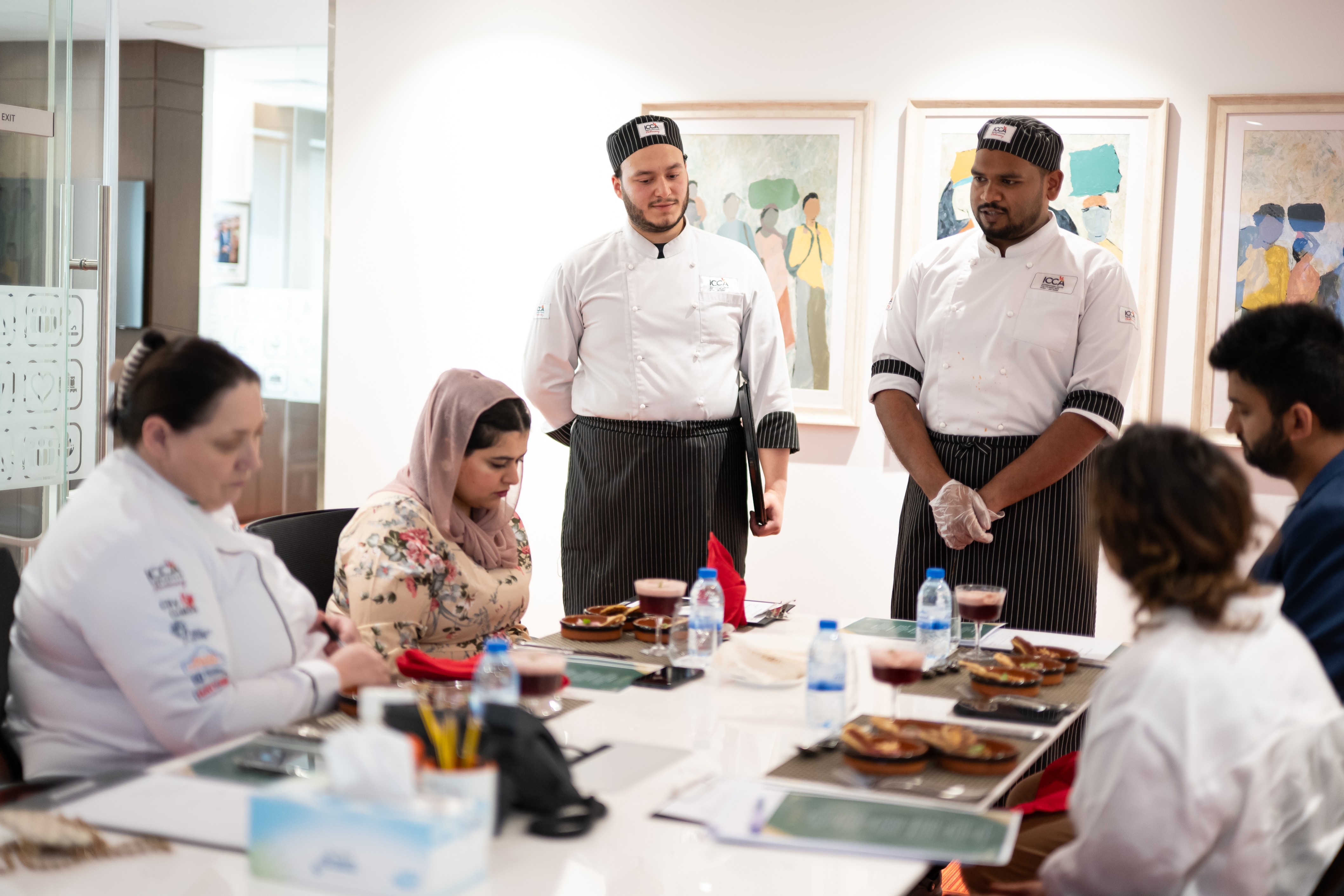
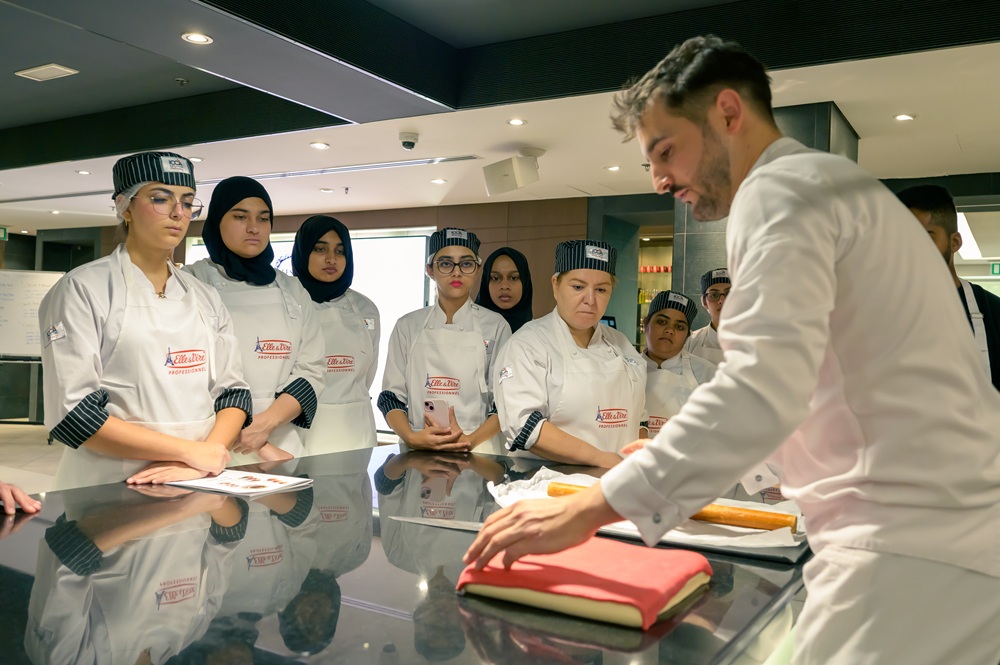
Unlike general management courses, this program develops leadership through the realities of professional culinary operations. Students do not only learn how to cook; they learn how professional kitchens function, how teams are organised, how standards are maintained, and how supervisors make decisions under time, quality, cost, and service pressure.
The program carries City & Guilds, London recognition for this specific culinary arts and supervision pathway. This is important because it positions the qualification within an internationally understood vocational framework, while still keeping the learning grounded in kitchen and hospitality operations.
For Dubai’s hotel, restaurant, catering, and F&B sector, this combination matters. Hospitality management is not learned only through theory. It is built through production discipline, mise en place, food safety, stock control, service timing, people supervision, and the ability to manage standards when the kitchen is under pressure.
ICCA Dubai is widely recognised as a leading culinary training centre in the region and is positioned among the top culinary institutes globally. Its strength lies in being practical, industry-facing, and deeply connected to the professional hospitality environment in the UAE.
Key Highlights
Program-specific international recognition: The Level 3 Advanced Diploma pathway is recognised through City & Guilds, London, giving graduates an internationally understood vocational qualification in culinary arts and supervision.
Supervision and management focus: The program includes dedicated learning around kitchen supervision, team leadership, food safety management, stock control, production planning, and operational readiness.
Built on culinary foundations: Students develop technical culinary capability before moving into supervision, ensuring that management is grounded in real operational understanding.
Focused full-time structure: The program is structured as an intensive full-time pathway of approximately 3 months, designed for learners who want concentrated professional development.
Job placement pathway: ICCA’s program includes placement support and industry connection pathways that help graduates move toward professional kitchen, hotel, restaurant, and catering environments. This should be understood as a structured career support pathway rather than an unconditional employment guarantee.
Purpose-built facilities: ICCA Dubai’s training environment includes professional kitchens, classrooms, and facilities designed around culinary and hospitality learning.
Experienced faculty: Students are trained by industry-experienced chef instructors and faculty certified through international awarding bodies.
International student support: Visa support and accommodation assistance may be available for eligible international students.
Fees: Fees start from approximately AED 23,625, with instalment options available depending on intake and student category.
Career Scope
Graduates can progress toward roles such as:
- Kitchen Supervisor
- Chef de Partie progressing toward Sous Chef
- Sous Chef progression pathway
- F&B Supervisor
- Restaurant Supervisor
- Catering Operations Supervisor
- Hotel F&B Operations Executive
- Hospitality Entrepreneur
Long term, the pathway can support progression toward senior kitchen management, restaurant leadership, catering operations management, or F&B business ownership. These outcomes depend on prior experience, workplace performance, employer requirements, and continued professional development.
Who It’s Best For
This program is best for culinary professionals, hospitality workers, and ambitious learners who want to move beyond technical execution into supervision and leadership. It is especially suitable for those who prefer practical, industry-embedded training over purely classroom-based management theory.
For those planning a long-term career in Dubai’s hospitality sector, ICCA’s Professional Diploma Programs at ICCA Dubai provide a more operational route into management than many generic leadership courses.
2. Executive Management Program, Oxford Management Centre — Best for Senior Executives
Program Overview
Oxford Management Centre offers executive-level management training for senior professionals who need to sharpen strategic thinking, decision-making, and organisational leadership. These courses are usually delivered as short intensive programs, making them suitable for busy managers and directors.
The content typically focuses on strategy, change management, executive communication, leadership effectiveness, and business decision-making. For Dubai-based professionals already working at a senior level, this type of program can provide structured reflection and frameworks that support better leadership judgement.
Key Highlights
Executive-level structure: Designed for senior managers, directors, and experienced professionals rather than entry-level learners.
Short intensive format: Programs often run for 5 to 10 days, allowing participants to study without stepping away from work for long periods.
Strategic focus: Topics commonly include leadership, decision-making, change, negotiation, communication, and organisational performance.
Professional networking: Participants may come from regional corporations, government entities, and multinational businesses, depending on the course intake.
Career Scope
- Senior Manager
- Director
- VP of Operations
- Strategic Planning Lead
- Business Unit Head
- General Manager pathway
Who It’s Best For
This course is best for experienced professionals who already manage teams or business units and want a short, structured executive development experience. It is less suitable for those needing hands-on operational training or industry-specific supervision.
3. Leadership Program, London Business School Dubai — Best for Emerging Leaders
Program Overview
London Business School has an active Dubai presence in DIFC, giving regional professionals access to executive education connected to one of the world’s recognised business schools. Its leadership programs are well suited to mid-career professionals preparing for broader management responsibilities.
These programs typically combine leadership theory, case studies, peer learning, and practical discussion around business challenges. For professionals working in regional offices, multinational companies, family businesses, and fast-growing organisations, this format can help bridge the gap between functional expertise and enterprise-level leadership.
Key Highlights
Global business school recognition: London Business School carries strong international reputation, which can strengthen executive profiles.
Modular learning format: Depending on the program, learning may be delivered across several weeks or months, allowing participants to balance study with professional responsibilities.
Leadership development focus: Topics may include influence, communication, decision-making, organisational behaviour, and leading through change.
Regional relevance: Dubai-based programs often attract participants working across the Middle East, giving the classroom a strong regional business context.
Career Scope
- Department Head
- General Manager pathway
- Regional Director pathway
- Business Development Director
- Strategy Manager
- Country Manager pathway
Who It’s Best For
This option is best for mid-career professionals preparing for senior leadership roles. It is particularly relevant for those who want a strong business-school environment without committing to a full MBA.
4. Management & Leadership Certification, Euromatech — Best for Professional Certification
Program Overview
Euromatech offers professional management and leadership certification courses in Dubai for working adults across corporate, government, and semi-government sectors. These programs are typically short and intensive, covering management fundamentals, leadership styles, organisational behaviour, communication, and team performance.
For professionals who need structured certification but cannot commit to a long academic program, this can be a practical option. As with all short professional courses, learners should verify the exact certification, approval status, and awarding body for the specific course before enrolling.
Key Highlights
Professional certification format: Courses are designed for workplace application and continuing professional development.
Short duration: Many programs run for 5 to 10 days, making them accessible for working professionals.
Management fundamentals: Content usually covers leadership approaches, planning, decision-making, performance management, and organisational effectiveness.
Dubai training environment: The provider serves a broad base of regional professionals, including public and private sector participants.
Career Scope
- Team Manager
- Operations Lead
- Department Supervisor
- Administrative Manager
- Business Support Manager
- Unit Head
Who It’s Best For
This course is best for professionals who want a recognised short-format management certificate to support internal promotion, performance improvement, or transition into supervisory roles.
5. Project Management / PMP — Best for Cross-Industry Management
Program Overview
Project management is one of the most transferable management skills in Dubai. From construction and engineering to IT, consulting, logistics, finance, events, and hospitality, organisations need people who can plan, coordinate, budget, control risk, and deliver work on time.
The Project Management Professional, or PMP, is a certification issued by the Project Management Institute, PMI. Training providers in Dubai offer PMP preparation courses, but the certification itself is awarded by PMI after candidates meet eligibility requirements and pass the exam.
In Dubai, PMP preparation is offered by multiple providers, including corporate academies, training institutes, and online learning platforms.
Key Highlights
Global certification: PMP is a PMI certification recognised across industries and markets.
Structured project methodology: Training usually covers scope, schedule, cost, risk, stakeholder management, communication, procurement, and project governance.
Exam-based pathway: PMP requires formal application, eligibility approval, exam preparation, and successful completion of the PMI exam.
Cross-industry use: The credential is useful in sectors including construction, IT, logistics, consulting, government projects, and operations.
Career Scope
- Project Manager
- Program Manager
- PMO Manager
- Delivery Lead
- Operations Project Lead
- Implementation Manager
Who It’s Best For
PMP is best for professionals who manage projects or want to move into project-based leadership. It is particularly useful for those working in construction, technology, consulting, logistics, engineering, and transformation roles.
6. MBA Part-Time / Evening — Best for Comprehensive Management Education
Program Overview
A part-time or evening MBA is one of the most comprehensive management education options in Dubai. Several universities offer MBA programs designed for working professionals, with classes delivered in evenings, weekends, modular formats, or blended learning structures.
An MBA usually covers finance, marketing, strategy, operations, leadership, entrepreneurship, organisational behaviour, and business analytics. It requires a bigger investment of time and money, but it can be valuable for professionals aiming for senior management, consulting, entrepreneurship, or regional leadership roles.
Key Highlights
Broad business curriculum: MBA programs cover multiple areas of management rather than one narrow skill set.
Working professional format: Evening and weekend structures help employed professionals continue working while studying.
Longer learning journey: Most part-time MBAs take around 18 to 24 months, although the exact structure varies by university.
Career repositioning value: An MBA can help professionals move from technical roles into general management, consulting, or entrepreneurship over time.
Career Scope
- General Manager pathway
- Management Consultant pathway
- Business Development Director
- Entrepreneur
- Operations Director
- Senior Corporate Leadership pathway
Who It’s Best For
An MBA is best for professionals seeking broad management education and long-term career repositioning. It suits candidates who can commit time, budget, and sustained academic effort.
7. Senior Executive Leadership, Meirc Training — Best for Senior Leadership Development
Program Overview
Meirc Training is a long-established professional training provider in the Middle East, known for management, leadership, HR, finance, and business skills programs. Its senior executive leadership courses are designed for directors, VPs, senior managers, and aspiring senior leaders.
These courses usually focus on strategic leadership, executive presence, board-level decision-making, stakeholder management, and organisational influence. They are short, intensive, and designed for professionals already operating at a high level.
Key Highlights
Senior leadership focus: The content is positioned for experienced professionals, not first-time managers.
Short masterclass format: Courses often run for 3 to 5 days, making them manageable for executives with limited time.
Board-level themes: Topics may include governance, strategy, influence, transformation, and executive communication.
Regional training experience: Meirc has a long history serving professionals across the GCC and wider Middle East.
Career Scope
- Executive Director pathway
- COO pathway
- Managing Director pathway
- Board Advisory pathway
- Regional Head
- Senior Department Leader
Who It’s Best For
This course is best for senior leaders who want to sharpen executive presence, decision-making, and strategic leadership. It should be viewed as leadership development for experienced professionals, not as a direct route to C-suite titles by itself.
8. Certified Professional Manager, Atton Institute — Best for Quick Certification
Program Overview
Certified Professional Manager courses are designed for professionals who need a fast, structured introduction to management responsibilities. Atton Institute currently operates in Dubai and markets short certified training courses, including 5-day formats across different business and management topics.
This type of course can be useful for newly promoted managers, supervisors, and team leaders who need practical language and tools to manage work more confidently.
Key Highlights
Short certification pathway: Many programs can be completed in around 5 days.
Core management skills: Training usually covers planning, delegation, leadership, communication, performance review, and problem-solving.
Suitable for new managers: The structure is accessible for professionals taking on management responsibilities for the first time.
Workplace application: The content is usually practical and focused on day-to-day team management.
Career Scope
- First-Time Manager
- Team Leader
- Shift Supervisor
- Department Coordinator
- Junior Operations Manager
- Administrative Supervisor
Who It’s Best For
This course is best for newly promoted professionals who need a quick and practical foundation in management. It is not a replacement for deeper leadership development, but it can be a useful first step.
9. Operations Management Course — Best for Process Improvement
Program Overview
Operations management courses focus on how organisations improve efficiency, reduce waste, manage resources, and deliver consistent service or production quality. In Dubai, these courses are relevant across logistics, manufacturing, hospitality, retail, healthcare, facilities management, and supply chain environments.
Programs may cover lean management, Six Sigma principles, workflow design, supply chain coordination, quality assurance, resource planning, and process improvement. For professionals managing systems rather than only teams, operations training can be highly practical.
Key Highlights
Process improvement focus: The training helps professionals identify inefficiencies, reduce delays, and improve output quality.
Sector relevance: Operations skills are valuable in logistics, manufacturing, hospitality, retail, healthcare, and service businesses.
Short course format: Many operations management courses run for 3 to 5 days.
Performance-oriented learning: The content is usually linked to productivity, quality control, cost reduction, and workflow improvement.
Career Scope
- Operations Manager
- Supply Chain Lead
- Quality Assurance Manager
- Process Improvement Specialist
- Production Supervisor
- Service Operations Manager
Who It’s Best For
This course is best for professionals responsible for improving systems, workflows, service delivery, or operational performance. It is especially useful for those working in logistics, manufacturing, hospitality, retail, and facilities management.
10. HR Management & People Leadership — Best for Team Leaders
Program Overview
HR management and people leadership courses help managers understand how to recruit, develop, motivate, review, and retain people. In Dubai, this is increasingly important as organisations build more structured teams, improve employee engagement, and respond to workforce development priorities.
Short courses may cover people management, performance reviews, employee relations, talent acquisition, engagement, and UAE labour law awareness. Formal CIPD qualifications are a separate professional pathway and usually require a longer study period. Learners should not assume every short HR course is CIPD-certified unless the provider clearly states this for the specific program.
Key Highlights
People management focus: Training supports managers who need to lead teams, handle performance conversations, and improve employee engagement.
Relevant to UAE workplaces: Many courses include regional employment context, labour law awareness, and workforce development considerations.
Multiple certification routes: Short courses may take 3 to 5 days, while formal HR qualifications such as CIPD pathways can take several months.
Useful beyond HR departments: People leadership is relevant for supervisors, department heads, operations managers, and business owners.
Career Scope
- HR Manager pathway
- People Operations Lead
- Team Leader
- Talent Development Manager
- Employee Engagement Specialist
- Department Supervisor
Who It’s Best For
This course is best for professionals who manage people directly or want to move into HR, talent development, or people operations. It is also useful for business owners building teams in Dubai.
How to Choose the Right Management Course in Dubai
Choosing between management courses in Dubai should not start with price alone. A short executive course, a PMP preparation program, a part-time MBA, and a hospitality supervision diploma serve different career purposes.
Accreditation & Industry Recognition
Check whether the course is accredited, certified, approved, or recognised by a relevant awarding body. These terms are not interchangeable.
For hospitality, ICCA Dubai’s Level 3 Advanced Diploma in Culinary Arts & Supervision carries program-specific City & Guilds, London recognition. For project management, PMP is a certification awarded by PMI, while Dubai-based training providers usually deliver exam preparation. For HR, CIPD qualifications are widely recognised, but not every short HR course is CIPD-certified.
Also be careful with broad claims such as “approved” or “accredited.” In Dubai, approval may apply to a provider, a course, a training permit, or a specific qualification pathway. Always confirm what exactly is recognised, who awards the certificate, and how employers in your industry view it.
Course Duration & Flexibility
Short courses are useful for targeted upskilling. MBAs and professional diplomas are better for deeper career development. Working professionals should also consider evening, weekend, modular, or intensive formats.
For hospitality professionals, ICCA’s focused professional pathways are relevant because they allow learners to build practical skills while preparing for industry roles, rather than only studying management concepts in isolation.
Practical vs Theoretical Balance
A strong management course should help you perform better at work. Look for case studies, simulations, workshops, supervised practice, assessments, workplace projects, or industry exposure.
This is especially important in hospitality. Managing a kitchen, café, restaurant, or catering operation requires operational understanding. The person leading the team must understand food safety, production flow, stock movement, service timing, team discipline, and guest expectations.
For companies looking to develop teams through practical F&B-based learning, ICCA’s corporate culinary training and team development programs and corporate team building programs offer a different style of management development through shared culinary execution, communication, coordination, and time-based teamwork.
Career Support & Networking Opportunities
Management education is stronger when it connects learners to industry. This may include guest speakers, alumni networks, employer links, internships, placement support, corporate participants, or peer learning.
For career starters, placement support can be more valuable than a certificate alone. For senior executives, peer network and strategic exposure may matter more.
Fees vs Return on Investment
A higher fee does not automatically mean better career value. Consider the likely return:
- Will the course help you get promoted?
- Will it help you change the industry?
- Will it prepare you for supervisory responsibility?
- Will it improve your salary potential?
- Will it help you start or manage a business?
- Will it give you a recognised credential?
For professionals who need ongoing skill renewal, ICCA’s CPD and continuous professional development options can support structured learning without requiring a full long-term program.
Final Thoughts: Management Training Should Match the Work You Want to Lead
The best management course is not always the most famous one. It is the one that prepares you for the kind of work, people, pressure, and responsibility you actually want to manage.
For corporate professionals, that may mean an executive leadership course, PMP certification, HR management training, or a part-time MBA. For hospitality professionals, the most relevant pathway is often one that develops both technical credibility and supervisory confidence.
This is where ICCA Dubai’s approach stands apart. In hospitality, leadership is not separate from operations. A strong supervisor must understand the kitchen, the team, the product, the timing, the safety standards, the guest experience, and the commercial pressure behind every service.
ICCA’s culinary and supervision pathways are built around that reality, making them especially relevant for those who want to grow into leadership within Dubai’s hotel, restaurant, catering, and F&B sectors.
.jpg)

.jpg)