Dubai has become one of the region’s strongest markets for skills-based careers. The city’s growth across hospitality, tourism, technology, healthcare, finance, aviation and digital services has created steady demand for trained professionals who can move quickly from classroom learning into workplace performance. For many learners, job-oriented courses in Dubai are now a practical alternative to long academic routes. These programs focus on employable skills, recognised certifications, hands-on training, and, in some cases, structured placement support. In a market where employers often prioritise operational readiness and communication skills alongside formal qualifications, especially across hospitality, retail, customer service and SME-driven sectors, a well-chosen course can significantly improve employability. Dubai’s private training ecosystem is also supported by regulatory oversight. KHDA’s Qualifications and Awards in Dubai framework helps regulate technical and vocational education and training across the emirate, creating a clearer structure for training quality and provider accountability. For students comparing the best courses in Dubai, the strongest options are usually the ones that combine practical training, recognised certifications and a realistic pathway into employment. Likewise, many learners exploring short courses in Dubai or diploma courses in Dubai are increasingly prioritising industry relevance over purely academic study.
Why Job-Oriented Courses Are the Fastest Path to Employment in Dubai
Dubai’s economy rewards practical competence. Hotels need chefs, cafés need trained baristas, companies need digital marketers, clinics need healthcare support staff, and corporate offices need finance, HR and administration professionals.
The city’s hospitality sector is one of the clearest examples. Dubai welcomed nearly 20 million international overnight visitors in 2025, while hotel occupancy continued to remain among the highest globally. This level of tourism activity creates sustained demand across hotels, restaurants, cafés, catering businesses and food retail operations.
At the same time, national investment into AI, digital transformation, and cybersecurity is creating new technical career routes. The UAE National AI Strategy 2031 and Dubai’s Smart City initiatives continue to accelerate demand for professionals who can work with data, automation, and digital systems.
This is why courses with placement in Dubai continue to attract both local and international learners. The strongest programs shorten the gap between training and employment by combining hands-on learning, recognised certification pathways and industry-facing exposure.
1. Professional Diploma in Culinary Arts (ICCA Dubai) — Best for Industry-Integrated Work Placement

Program Overview
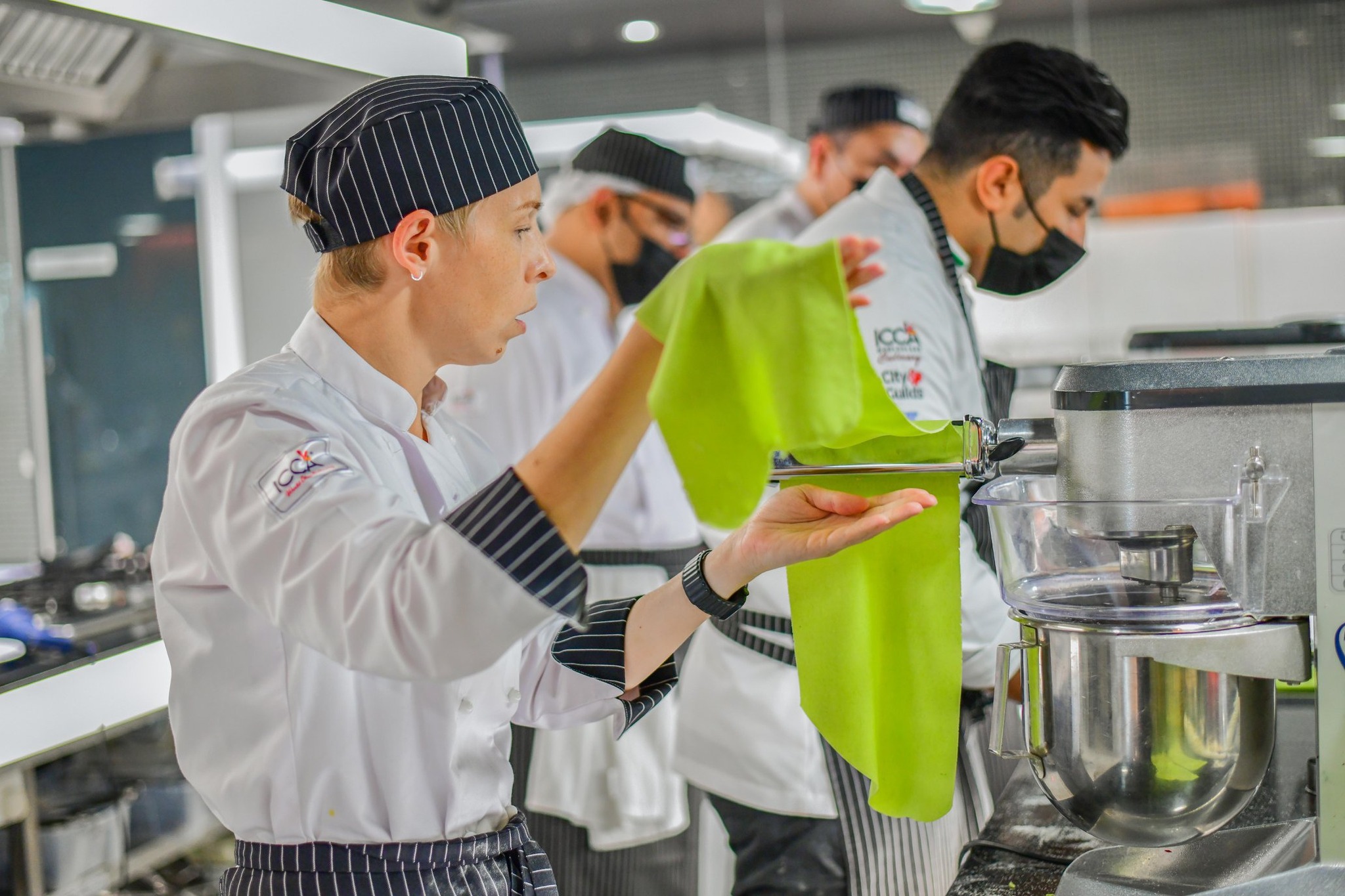
ICCA Dubai’s professional culinary diploma pathway remains one of the most employment-focused hospitality training routes in the UAE. The programs are structured around operational kitchen training, practical assessments and industry-readiness rather than purely theoretical culinary education.
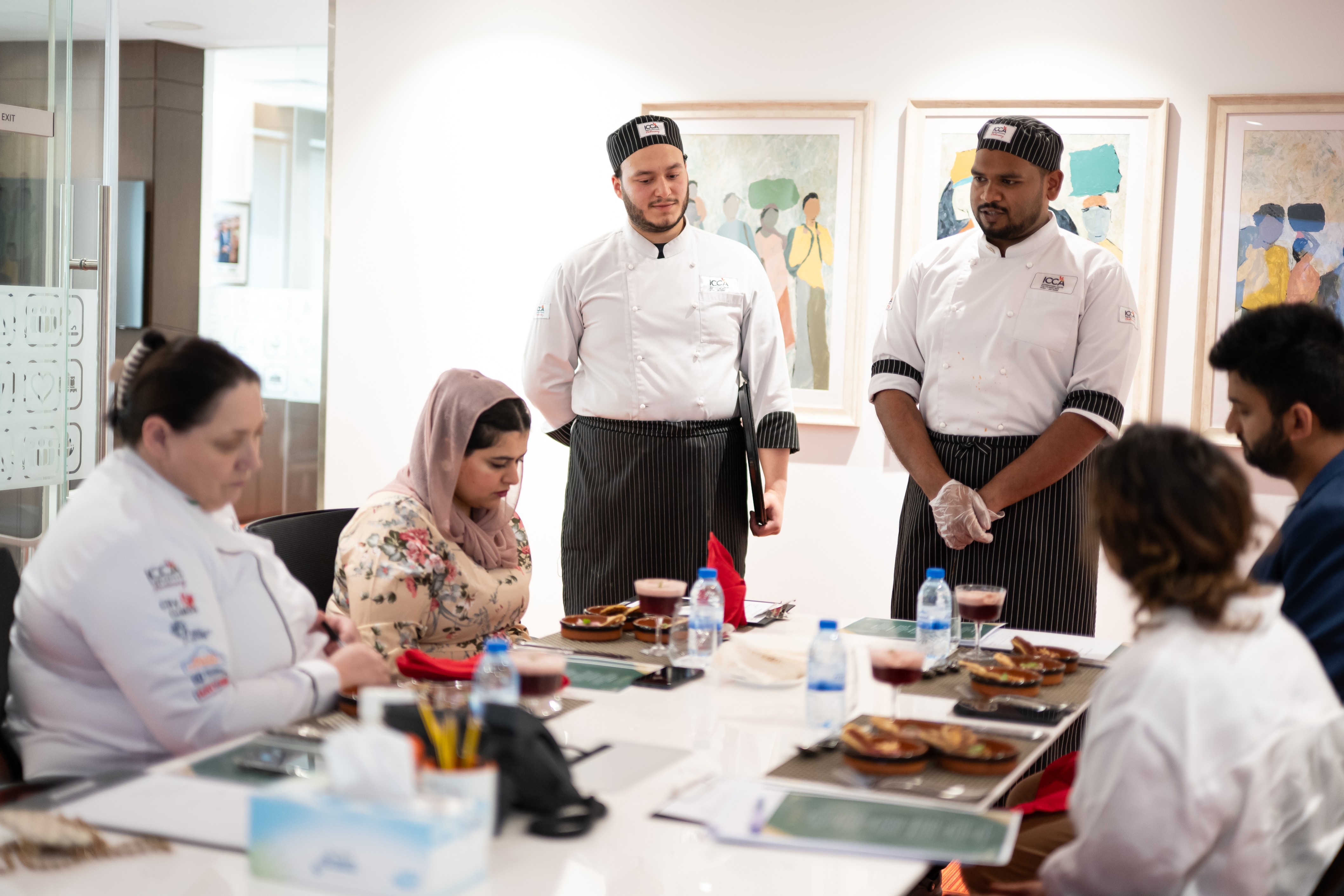
The Professional Diploma Programs at ICCA Dubai are internationally recognised through City & Guilds IVQ qualifications and Worldchefs recognition frameworks. Students train inside professional kitchen environments that closely mirror the pace, workflow and discipline of commercial hospitality operations.
Dubai’s hospitality sector continues to support strong culinary employment demand. With hundreds of hotels, restaurants, café concepts and catering businesses operating across the emirate, trained kitchen professionals remain consistently employable across multiple hospitality segments.
For eligible diploma students, ICCA also provides a 100% guaranteed paid work placement pathway through hospitality industry partnerships across the UAE. This placement-linked structure makes the program one of the more operationally grounded job-oriented courses in Dubai for learners seeking direct industry exposure.
Key Highlights
- City & Guilds, London IVQ Level 2 pathway
- Worldchefs-recognised culinary training framework
- 3-month full-time intensive format or 12-month weekend structure
- Guaranteed paid work placement pathway for eligible diploma students
- State-of-the-art training facilities in Dubai Knowledge Park
- International faculty with professional hospitality experience
- Visa support and accommodation assistance for international students
- Fees starting from approximately AED 47,448 with instalment options available
Students can pursue specialized pathways including the Diploma in Culinary Arts - Cookery and the Diploma in Baking & Patisserie, depending on their career interests and long-term hospitality goals.
Career Scope
Graduates may progress into roles such as:
- Commis Chef
- Assistant Chef
- Pastry Chef
- Baker
- Kitchen Coordinator
- Food Entrepreneur
- Café or Restaurant Operator
Students pursuing the Level 3 Advanced Diploma in Culinary Arts may also develop supervisory and kitchen leadership capabilities relevant to larger hospitality operations.
Who It’s Best For
This pathway is particularly suitable for career changers, school leavers, aspiring chefs and international students who want structured hospitality training with strong practical exposure.
Compared with many general vocational programs, ICCA’s culinary training feels closely aligned with actual kitchen realities — including workflow management, production discipline, hygiene standards, timing, teamwork and service pressure.
2. Digital Marketing Certification — Best for Quick Employment
.jpg)
Program Overview
Digital marketing remains one of the fastest-growing skill categories in Dubai’s employment market. Businesses across hospitality, retail, education, real estate and professional services increasingly rely on digital channels to generate leads, build brand visibility and communicate with customers.
Most digital marketing certification programs cover SEO, paid advertising, content marketing, social media management, analytics and email marketing. Because the learning curve is relatively accessible compared to highly technical industries, it is often considered one of the more approachable quick courses for jobs in Dubai.
Key Highlights
- Covers SEO, PPC advertising, analytics and content strategy
- Common certification pathways include Google, HubSpot and DMI
- Typical duration ranges between 2–3 months
- Strong demand across SMEs, agencies and in-house marketing teams
Career Scope
Possible entry-level roles include:
- Digital Marketing Executive
- SEO Executive
- PPC Coordinator
- Content Marketing Assistant
- Social Media Executive
Depending on technical ability, communication skills and portfolio quality, junior-level salaries in Dubai may range approximately between AED 8,000–15,000 per month.
Who It’s Best For
This course is suitable for graduates, freelancers, business owners and career changers who want relatively fast entry into Dubai’s digital economy.
3. IT & Cybersecurity — Best for High-Salary Tech Jobs
Program Overview
Cybersecurity has become one of the UAE’s most strategically important technical sectors. Government entities, financial institutions, logistics companies and enterprise organisations are all increasing investment into digital security infrastructure.
Training programs typically focus on network security, ethical hacking, penetration testing, risk management and compliance frameworks. Dubai’s continued investment into digital transformation has made cybersecurity one of the strongest long-term technical career tracks in the region.
Key Highlights
- Covers ethical hacking, threat analysis and security operations
- Common certifications include CompTIA Security+ and CEH
- Strong employer demand across enterprise and government sectors
- Most foundation programs range between 3–6 months
Career Scope
Common entry-level pathways include:
- Junior Security Analyst
- SOC Analyst
- Security Operations Support
- IT Security Coordinator
Depending on prior IT experience and certification level, technical security roles in Dubai may offer relatively strong salary progression compared to many other short-course pathways.
Who It’s Best For
This course is best suited for technically inclined learners, IT support professionals and networking graduates who want to specialise in security-focused infrastructure roles.
4. Data Analytics & AI — Best for Future-Ready Careers
Program Overview
Data analytics and AI-related training continues to grow as organisations increasingly rely on automation, reporting and predictive decision-making. Many programs introduce students to Python, SQL, dashboards, machine learning fundamentals and business intelligence tools.
The UAE’s push toward AI-enabled infrastructure and smart-city systems has increased demand for professionals who can interpret and manage operational data effectively.
Key Highlights
- Covers analytics tools, SQL, Python and reporting systems
- Common pathways include IBM and Google professional certificates
- Increasing demand across finance, retail, logistics and technology sectors
- Typical duration ranges from 3–6 months
Career Scope
Possible entry-level pathways include:
- Junior Data Analyst
- Reporting Analyst
- Business Intelligence Support Analyst
- Data Visualisation Assistant
Depending on technical ability and prior experience, salaries can vary significantly across industries and employer types.
Who It’s Best For
This pathway is well suited for analytical learners who are comfortable working with systems, reporting structures and data-driven business environments.
5. Nursing & Healthcare Assistant — Best for Healthcare Jobs
.jpg)
Program Overview
Dubai’s healthcare sector continues to expand through hospitals, clinics, rehabilitation centres, home care providers and medical tourism services. This growth creates ongoing demand for healthcare support staff and patient-care professionals.
Healthcare assistant programs typically cover patient support, infection control, first aid, healthcare communication and clinical support procedures.
Key Highlights
- Covers patient care fundamentals and healthcare compliance
- DHA licensing pathway awareness is important for employability
- Clinical support and practical care training commonly included
- Course duration usually ranges from 6–12 months
Career Scope
Potential career pathways include:
- Healthcare Assistant
- Nursing Aide
- Clinical Support Assistant
- Home Care Assistant
Who It’s Best For
This pathway is suitable for compassionate, detail-oriented learners who want to work in patient-facing healthcare environments.
6. Accounting & Bookkeeping Diploma — Best for Finance Roles
Program Overview
Accounting and bookkeeping continue to offer relatively stable employment opportunities in Dubai’s corporate market. Businesses of all sizes require payroll management, VAT compliance, bookkeeping and financial reporting support.
Most accounting diploma pathways cover financial accounting, bookkeeping, UAE VAT principles, payroll systems and audit fundamentals.
Key Highlights
- Covers bookkeeping, payroll and UAE VAT frameworks
- Can support progression toward AAT or ACCA pathways
- Relevant across SMEs, finance departments and accounting firms
- Typical duration ranges from 3–6 months
Career Scope
Potential entry-level roles include:
- Junior Accountant
- Accounts Assistant
- Bookkeeper
- Payroll Assistant
Who It’s Best For
This course is suitable for learners who prefer structured office-based work and detail-oriented operational tasks.
7. IATA Travel & Tourism — Best for Aviation & Travel
Program Overview
Dubai remains one of the world’s largest aviation and tourism hubs. This creates steady demand for professionals trained in airline ticketing, travel operations and customer service systems.
IATA-aligned travel and tourism programs typically focus on GDS systems such as Amadeus and Galileo, reservation systems, fare calculation and travel coordination.
Key Highlights
- Covers ticketing systems and travel operations
- IATA certification remains globally recognised
- Suitable for airline, tourism and travel agency careers
- Most programs range between 2–4 months
Career Scope
Potential roles include:
- Travel Consultant
- Airline Ticketing Agent
- Tour Coordinator
- Airport Ground Support Staff
Who It’s Best For
This pathway suits learners who enjoy customer-facing environments, travel coordination and aviation-related operations.
8. Web Development Bootcamp — Best for Developer Roles
Program Overview
Web development bootcamps are designed to prepare learners for practical entry-level development work in relatively short timeframes. Most programs cover front-end development, responsive design, JavaScript frameworks and basic backend functionality.
Dubai’s growing startup ecosystem and broader digital economy continue to create demand for developers who can build and maintain digital platforms.
Key Highlights
- Covers HTML, CSS, JavaScript and frontend frameworks
- Portfolio-based learning structure
- Practical project development commonly included
- Typical duration ranges between 3–6 months
Career Scope
Potential entry-level roles include:
- Junior Front-End Developer
- Web Developer Assistant
- Junior Full-Stack Developer
- Website Support Developer
Who It’s Best For
This pathway suits technically curious learners who enjoy structured problem-solving and digital product creation.
9. HR & Office Administration — Best for Corporate Jobs
Program Overview
HR and office administration courses remain popular because administrative and coordination roles exist across almost every sector in Dubai’s economy.
Most programs cover recruitment support, office systems, business communication, scheduling, documentation management and employee coordination procedures.
Key Highlights
- Covers office administration and HR coordination fundamentals
- CIPD-aligned pathways commonly available
- Widely applicable across SMEs and corporate environments
- Typical duration ranges between 2–4 months
Career Scope
Potential career pathways include:
- HR Assistant
- Office Administrator
- Recruitment Coordinator
- Executive Assistant
Who It’s Best For
This course suits organised learners who are comfortable with communication, coordination and operational support responsibilities.
10. Barista Skills Certification (ICCA Dubai) — Best for Immediate Employment in F&B
.jpg)
Program Overview
Dubai’s specialty coffee and café market continues to expand rapidly, creating strong demand for trained baristas across cafés, hotel lounges, bakeries and lifestyle hospitality brands.
The Barista Skills course at ICCA Dubai is delivered through an intensive short-format practical training structure focused on espresso preparation, milk texturing, brewing techniques, café workflow and customer service fundamentals.
Compared with many general hobby-style coffee workshops, the program places stronger emphasis on operational café readiness and hospitality standards.
Key Highlights
- Intensive 5-day practical training structure
- Covers espresso extraction, latte art and brewing methods
- Includes café workflow and service fundamentals
- Suitable for hospitality employment and café entrepreneurship
Career Scope
Potential roles include:
- Barista
- Café Assistant
- Café Supervisor
- Coffee Cart Operator
- Independent Café Entrepreneur
Who It’s Best For
This course is well suited for learners seeking fast entry into Dubai’s hospitality sector, particularly within cafés, lifestyle F&B brands and specialty coffee operations.
How to Choose the Right Job-Oriented Course in Dubai
Industry Demand & Placement Rates
The best career-oriented courses in Dubai are usually connected to sectors with sustained operational demand. Hospitality, healthcare, finance, aviation and technology all continue to create employment opportunities, but the type of skills required differs significantly.
Before enrolling, learners should evaluate whether a program includes practical exposure, internship opportunities, placement support or employer-facing industry engagement.
Accreditation & Employer Recognition
Employer recognition matters more than marketing language. City & Guilds, Worldchefs, CompTIA, IATA, ACCA, CIPD and similar industry-recognised frameworks often carry stronger long-term value than generic certificates.
Learners should also understand that provider approval structures, certifications and KHDA-related recognition can vary depending on the specific program.
Course Duration & Fast-Track Options
Some quick courses for jobs can genuinely support rapid employability, especially in hospitality, administration and digital support roles. However, more technical industries such as cybersecurity and analytics often require continued practice beyond initial certification.
The key is matching course intensity with realistic career expectations.
Practical Training & Work Experience
The strongest skill based courses Dubai offers are usually the ones built around applied learning. This may include kitchen production, technical labs, simulations, portfolio projects, business scenarios or operational workflow training.
This is particularly important in hospitality environments, where speed, consistency, teamwork and execution matter just as much as theoretical knowledge.
Fees & Return on Investment
Course fees should be evaluated against employability outcomes, certification value, practical exposure and long-term career direction.
A premium vocational diploma may still deliver strong value if it provides industry exposure, internationally recognised pathways and structured workplace integration.
Choosing a Career Course That Actually Leads Somewhere
A strong job-oriented course should do more than add another certificate to a CV. The best programs help learners build confidence inside real working environments while developing practical skills employers can immediately recognise.
For some learners, that may mean entering finance, digital marketing or technical support fields. For others, particularly those drawn toward hospitality, food business and customer-facing operations, culinary arts and barista training remain among Dubai’s most directly employable vocational pathways.
ICCA Dubai’s culinary and coffee training programs stand out because they are closely connected to operational hospitality realities rather than purely classroom-based instruction. Kitchen workflow, production discipline, café standards, service timing and workplace readiness remain central to the training experience.
Ultimately, the right course is the one that aligns with both your personal strengths and the realities of the industry you want to enter.