Vocational training in Dubai has become one of the most practical routes for students, professionals, career changers, and entrepreneurs who want skills that can be applied directly in the workplace. Unlike purely academic study, vocational education is built around practice, workplace standards, and job-readiness. In Dubai, this matters especially because many of the city’s strongest sectors - hospitality, technology, healthcare, beauty, construction, automotive, and creative industries, continue to depend on people who can perform confidently from day one. For learners comparing best courses in Dubai or more specific job oriented courses in Dubai, vocational training offers a clear advantage: it connects learning to real work, real tools, real customer expectations, and measurable career outcomes.
Why Vocational Training in Dubai Is the Fastest Path to Employment
Dubai’s economy has always rewarded practical capability. From hotel kitchens and cafés to clinics, salons, workshops, construction sites, and IT support desks, employers need people who understand not only theory, but also how work is actually done.
This is where vocational courses in Dubai play an important role. They are designed to build technical skills, workplace habits, and professional confidence in a shorter, more focused format than traditional degree pathways.
Dubai’s education and training environment is also becoming more closely aligned with future workforce needs. KHDA’s Jobs of the Future report highlights the importance of resilient, adaptable learning pathways that support Dubai’s wider economic agenda and prepare learners for changing skills demand. UNESCO-UNEVOC also notes that Dubai’s Qualifications and Awards in Dubai division regulates the technical and vocational education and training sector, giving TVET an important role in the emirate’s skills-development framework.
For students and working adults, the appeal is simple. A strong vocational training program should help them build usable skills, understand industry standards, and move closer to employment, entrepreneurship, or career progression.
1. Professional Diploma in Culinary Arts, ICCA Dubai — Best Vocational Training in Dubai

Program Overview
Vocational education is built on the principle of learning by doing, and ICCA Dubai’s Professional Diploma in Culinary Arts is one of the clearest examples of this approach in Dubai’s hospitality training ecosystem.
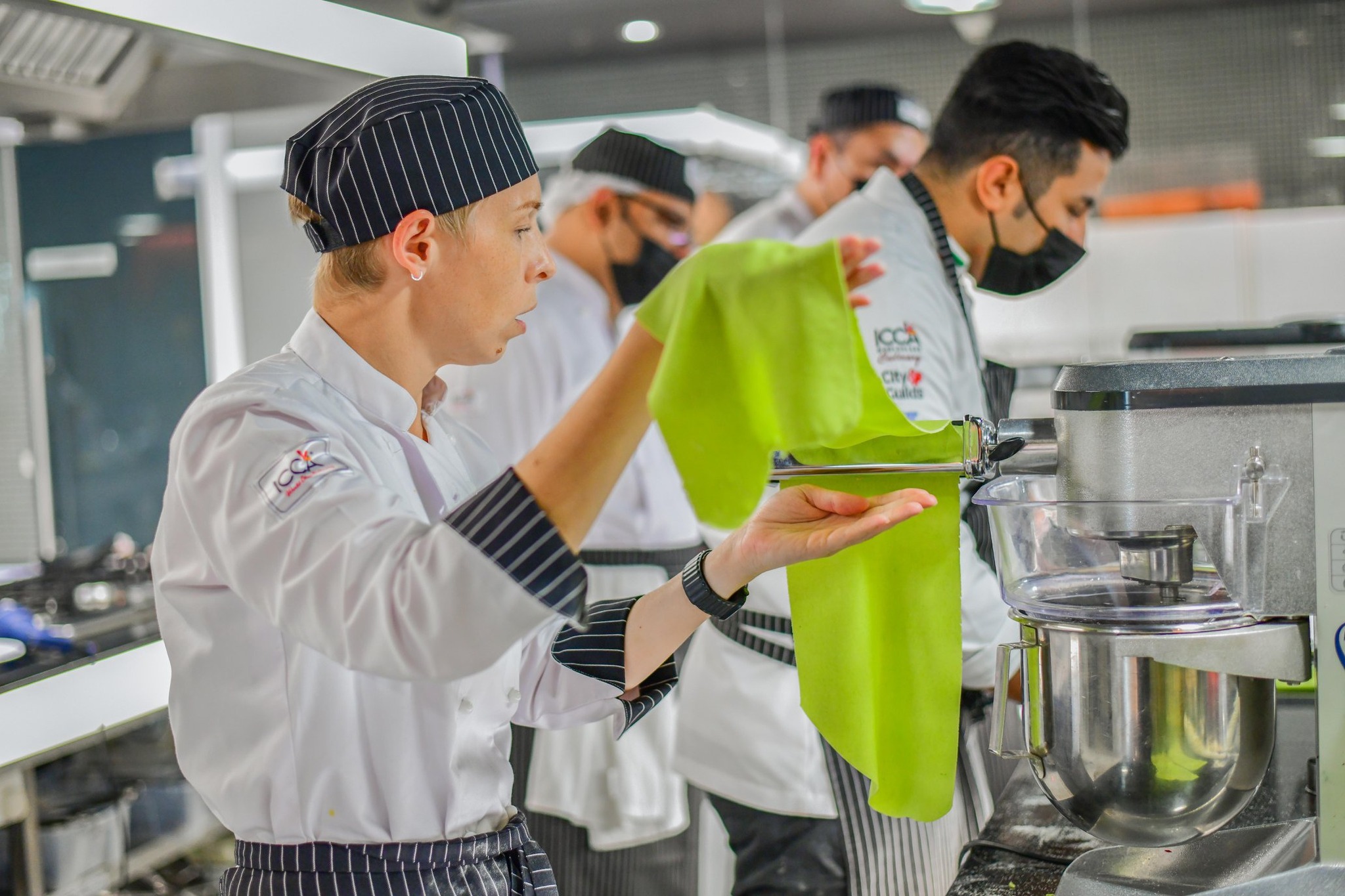
The program is application-focused, industry-centred, and outcome-driven, preparing students for real kitchen environments rather than only classroom understanding. From the beginning, students work in professional kitchens under the guidance of internationally experienced chef instructors, developing the techniques, discipline, speed, and confidence expected in hotels, restaurants, bakeries, and food businesses.
ICCA Dubai’s diploma pathways are accredited by City & Guilds, London, and recognised by Worldchefs, with ICCA also featured among the Top 10 Culinary Institutes in the World and awarded the Recognition of Quality Culinary Education by Worldchefs.
Key Highlights
The Professional Diploma in Culinary Arts at ICCA Dubai is designed for learners who want structured, professional culinary training with clear career outcomes.
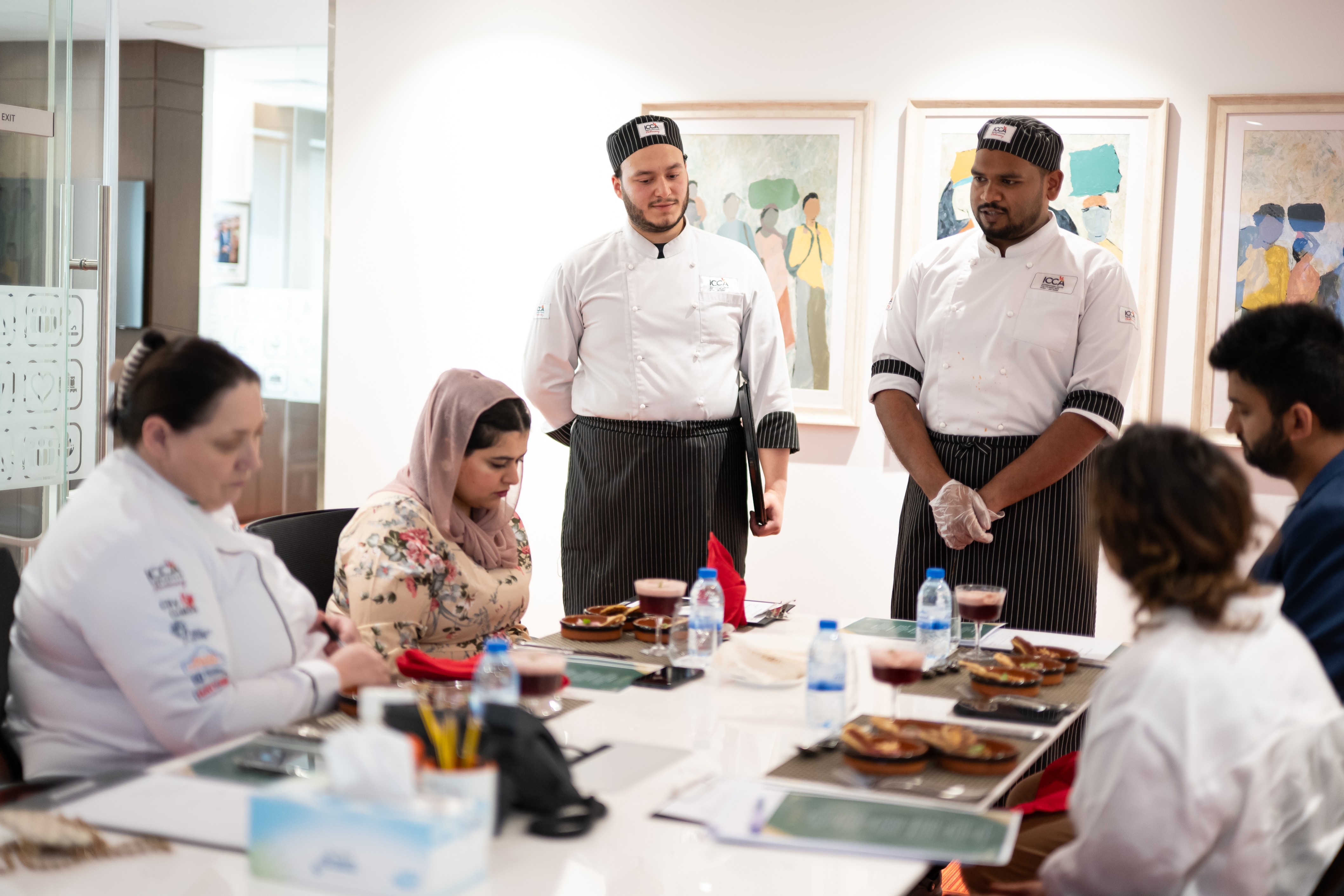
The program includes City & Guilds, London accreditation, Worldchefs recognition, and KHDA attestation, giving students a qualification pathway with international and local relevance. ICCA’s professional diploma courses are positioned as intensive 90-day programs in cookery and baking and patisserie, with a placement pathway for graduates.
Students spend the majority of their time in professional kitchen environments, working with commercial-grade equipment and practical assessment standards. This is important because culinary work is not learned by observation alone. Knife skills, mise en place, heat control, timing, plating, hygiene, production discipline, and kitchen communication all require repetition under professional supervision.
The program also goes beyond cooking technique. Students are introduced to the operational side of food businesses, including kitchen workflow, food safety, costing awareness, supplier understanding, and supervisory readiness. These are the details that matter in Dubai’s hospitality industry, where graduates may work in hotels, restaurants, cafés, cloud kitchens, catering companies, or start their own food ventures.
ICCA Dubai’s campus in Dubai Knowledge Park is equipped with professional training kitchens designed to mirror real industry environments. The learning environment supports both technical training and professional behaviour: punctuality, station discipline, consistency, teamwork, and service readiness.
International students may also benefit from support around visa and accommodation arrangements, making the program suitable for learners coming to Dubai specifically to build a culinary career.
Career Scope
Graduates may progress into roles such as:
- Commis Chef
- Demi Chef de Partie
- Pastry Chef
- Baker
- Kitchen Supervisor
- Catering Business Owner
- Cloud Kitchen Operator
- Food Entrepreneur
- Cruise Line Chef
- Restaurant or Café Founder
With further experience and advanced study, students may also move toward supervisory roles, including sous chef or kitchen management pathways.
Who It’s Best For
This program is best suited for learners who want a serious, hands-on route into the culinary and hospitality industry. It is especially relevant for school leavers, career changers, food entrepreneurs, and passionate cooks who want to move from interest to profession with recognised training, structured practice, and industry placement support.
2. Barista Skills Certification, ICCA Dubai — Best Short Vocational Course
.jpg)
Program Overview
Coffee service has become a great professional skill in Dubai’s café, hotel, restaurant, and specialty beverage market. ICCA Dubai’s Barista Skills Certification is a short, intensive vocational course designed for learners who want to understand coffee from bean to cup and apply that knowledge in a real service environment.
The program is accredited by City & Guilds, UK, and is suitable for coffee enthusiasts, aspiring café owners, and those looking to begin a professional career as baristas.
Key Highlights
This five-day program focuses on practical barista skills, including espresso extraction, milk texturing, latte art, manual brewing, coffee origins, grinder adjustment, sensory evaluation, and beverage consistency.
Students train with professional-standard equipment in a purpose-built environment, which is essential for understanding how pressure, grind size, dose, yield, milk temperature, and workflow affect the final cup.
The course is also useful for future café owners, because coffee quality is not only about taste. It affects service speed, customer retention, menu pricing, staff training, and daily operations.
No prior experience is required, making this one of the most accessible short vocational courses in Dubai for learners who want a fast, practical entry point into the F&B sector.
Career Scope
Graduates may move into roles such as:
- Certified Barista
- Head Barista
- Café Supervisor
- Café Manager
- Coffee Shop Owner
- Coffee Consultant
Who It’s Best For
This course is ideal for beginners, hospitality professionals, café staff, entrepreneurs, and anyone who wants a practical, recognised coffee qualification in a short period.
3. IT & Networking Vocational Diploma, ASTI Academy / ISB Institute — Best for Tech Careers
Program Overview
IT and networking vocational training prepares students for one of the most stable technical career routes in Dubai. As businesses continue to depend on cloud systems, cybersecurity, hardware, software, and internal networks, practical IT support remains a strong entry point into the technology sector.
These vocational courses in Dubai usually combine classroom learning with lab-based exercises, helping students understand how systems work and how problems are diagnosed in real-world settings.
Key Highlights
Programs commonly cover networking fundamentals, hardware and software troubleshooting, operating systems, cybersecurity basics, cloud computing, server support, and help desk operations.
Many learners use these courses as a pathway toward recognised certifications such as CompTIA, Cisco CCNA, and Microsoft certifications.
KHDA-approved training providers in Dubai may offer different formats, including full-time, part-time, and weekend study options.
The strongest programs usually include practical labs, simulated troubleshooting tasks, and exposure to workplace IT scenarios.
Career Scope
Graduates may pursue roles such as:
- IT Support Technician
- Network Administrator
- Help Desk Analyst
- Systems Support Engineer
- Junior Cybersecurity Technician
Who It’s Best For
This pathway is suitable for learners who enjoy problem-solving, systems thinking, and technical support. It is also a practical choice for career changers who want to enter the technology sector without starting with a long academic degree.
4. Automotive & Technical Training, Power TTC — Best for Automotive Careers
Program Overview
Dubai’s automotive sector includes luxury vehicles, fleet operations, service centres, logistics companies, and a growing interest in hybrid and electric vehicle maintenance. Automotive vocational training gives students hands-on workshop experience with real vehicles, tools, diagnostics, and repair procedures.
Power Technical Training Centre is known as a specialist provider in automotive and technical training, with programs focused on practical skills for workshop environments.
Key Highlights
Courses may cover automotive mechanics, electrical systems, diagnostics, air conditioning, engine systems, vehicle servicing, and hybrid or EV-related maintenance.
Students typically train in workshop settings, using industry tools and equipment rather than only studying vehicle systems in theory.
Dubai’s luxury automotive market places high value on accuracy, service discipline, and diagnostic capability.
Technical training can also support career growth into workshop supervision, service advising, or fleet maintenance.
Career Scope
Graduates may work as:
- Automotive Technician
- Service Advisor
- Workshop Assistant
- Workshop Supervisor
- EV Maintenance Technician
- Fleet Maintenance Coordinator
Who It’s Best For
This course is best for learners who enjoy mechanical systems, hands-on technical work, and workshop-based problem-solving. It is also suitable for those who want a trade skill with long-term career stability.
5. Healthcare Assistant Vocational Course — Best for Healthcare Entry
Program Overview
Healthcare assistant courses provide practical entry-level training for people who want to work in clinics, hospitals, care facilities, and healthcare support roles. In Dubai, healthcare is a regulated sector, so students should always check whether a program supports DHA-related requirements where relevant.
The best healthcare assistant vocational courses focus on patient support, basic clinical awareness, infection control, first aid, and workplace professionalism.
Key Highlights
Training usually includes patient care basics, vital signs monitoring, infection control, first aid, medical terminology, communication, and clinic support procedures.
Some programs may help learners prepare for DHA licensing or related healthcare pathways, depending on the provider and qualification level.
Dubai’s healthcare sector continues to expand through hospitals, clinics, specialist centres, and Dubai Healthcare City.
Students should verify provider approvals, licensing outcomes, and whether practical training or clinical exposure is included.
Career Scope
Graduates may pursue roles such as:
- Healthcare Assistant
- Patient Care Aide
- Clinic Assistant
- Medical Receptionist
- Clinic Coordinator
Who It’s Best For
This pathway suits learners who are patient, service-minded, detail-oriented, and comfortable working in care environments. It is especially relevant for those looking for an entry point into healthcare support before pursuing further qualifications.
6. Artisanal Bread, Chocolate & Gelato, ICCA Dubai — Best Specialty Food Vocational Courses

Program Overview
Specialty food skills are increasingly valuable in Dubai’s F&B market, where bakeries, cafés, hotels, dessert concepts, and boutique food businesses continue to develop more refined menus. ICCA Dubai’s artisanal courses in bread, chocolate, and gelato give learners focused, hands-on training in high-demand specialty areas.
These short vocational courses are designed for professionals, entrepreneurs, and serious food enthusiasts who want to add commercially useful skills without committing immediately to a full diploma pathway.
Key Highlights
The Artisanal Bread course focuses on bread-making techniques, fermentation, dough handling, shaping, baking, and production understanding. ICCA describes its bread training as an immersive course in artisan bread-making techniques.
The Artisanal Chocolate course introduces chocolate handling, tempering, moulding, filling, flavour pairing, and finishing techniques used in patisserie and boutique chocolate production.
The Artisanal Gelato course supports learners interested in frozen dessert production, flavour development, texture, balancing, and presentation.
Training takes place in ICCA Dubai’s professional facilities, allowing students to work with tools, ingredients, and methods that reflect commercial food production more closely than casual hobby classes.
Career Scope
These courses may support roles such as:
- Artisan Baker
- Chocolatier
- Gelato Maker
- Pastry Chef
- Bakery Owner
- Dessert Concept Founder
- Specialty Food Entrepreneur
Who It’s Best For
These courses are best for food entrepreneurs, bakery owners, pastry professionals, café operators, and serious learners who want to build a focused specialty skill with direct commercial application.
7. Beauty & Cosmetology Vocational Diploma — Best for Beauty Industry Careers
Program Overview
Dubai’s beauty and wellness industry is highly service-driven, with strong demand for trained professionals in salons, spas, hotels, bridal services, skincare clinics, and freelance beauty work. A beauty and cosmetology vocational diploma helps learners build practical client-facing skills in hair, makeup, skincare, nails, and salon operations.
The strongest programs combine technical training with hygiene, client consultation, product understanding, and supervised practice.
Key Highlights
Courses may cover hair styling, skincare, makeup artistry, nail technology, waxing, product knowledge, and salon management basics.
Many KHDA-approved providers offer practical salon-style environments where students train with tools, models, or clients.
Dubai’s beauty market rewards professionals who combine technical skill with service etiquette, consistency, and presentation.
Learners should check whether the course supports local licensing requirements for their intended role.
Career Scope
Graduates may work as:
- Hair Stylist
- Makeup Artist
- Skincare Therapist
- Nail Technician
- Beauty Consultant
- Salon Owner
Who It’s Best For
This pathway is suitable for creative, service-oriented learners who enjoy working with clients and want a practical career in beauty, wellness, or personal care.
8. Construction & Safety Management — Best for Built Environment Careers
Program Overview
Construction and safety management training supports one of Dubai’s most important employment sectors. With ongoing development across hospitality, real estate, infrastructure, logistics, and commercial projects, there is consistent demand for professionals who understand site discipline, safety standards, documentation, and operational control.
These vocational courses are especially relevant for learners who want to move into site supervision, HSE, quality control, or project coordination roles.
Key Highlights
Courses may cover construction site management, occupational health and safety, risk assessment, quality control, project planning, incident reporting, and site communication.
International certifications such as NEBOSH, IOSH, and CITB are commonly associated with construction and HSE training pathways.
Training providers in Dubai may offer short certificates, exam preparation, and professional development courses for working adults.
The strongest programs are practical, scenario-based, and aligned with site realities rather than only policy theory.
Career Scope
Graduates may pursue roles such as:
- Site Supervisor
- HSE Officer
- Safety Coordinator
- Quality Control Inspector
- Construction Manager
- Safety Auditor
Who It’s Best For
This course is best for learners already working in construction, engineering, facilities, or operations, as well as those who want a practical entry route into the built environment sector.
9. Dry Mixology & Bartending, ICCA Dubai — Best Beverage Service Vocational Course

Program Overview
Beverage service in the UAE is becoming more sophisticated, especially with the growth of premium cafés, lounges, hotels, restaurants, and alcohol-free beverage concepts. ICCA Dubai’s Dry Mixology & Cocktail Zero course focuses on non-alcoholic designer drinks, flavour balance, presentation, and bar operations.
The course is especially relevant in the UAE, where mocktails, zero-proof beverages, and premium non-alcoholic menus are part of both hospitality service and cultural market relevance.
Key Highlights
The Dry Mixology & Cocktail Zero course introduces learners to ingredients, flavour profiling, preparation methods, presentation techniques, and customer-focused beverage service.
ICCA Dubai offers the course in partnership with Alembic, a creative drinks agency specialising in drinks education and beverage experience in the MENA region.
The three-day intensive format is suitable for hospitality professionals who want to improve beverage skills without taking a long program.
Students learn how to think about balance, aroma, garnish, service flow, and visual finishing — all important in premium F&B environments.
Career Scope
Graduates may apply the skills in roles such as:
- Bartender
- Beverage Service Professional
- Lounge Service Staff
- F&B Supervisor
- Beverage Manager
- Mocktail Consultant
- Café or Restaurant Entrepreneur
Who It’s Best For
This course is best for hotel staff, restaurant teams, café owners, beverage entrepreneurs, and F&B professionals who want practical beverage training aligned with UAE hospitality expectations.
10. Fashion Design & Textile Technology — Best for Creative Industry Careers
Program Overview
Fashion design and textile technology training prepares students for careers in design studios, fashion houses, retail brands, costume work, and creative entrepreneurship. Dubai’s position as a regional hub for fashion, retail, events, and lifestyle makes this a relevant vocational pathway for learners with strong creative and technical interests.
Good fashion vocational training should combine design thinking with pattern-making, textile knowledge, garment construction, and portfolio development.
Key Highlights
Courses may cover fashion illustration, garment construction, pattern cutting, draping, textile technology, CAD tools, styling, and fashion merchandising.
Dubai Design District and the wider creative economy provide exposure to fashion events, designers, retail brands, and creative business networks.
Hands-on studio work is essential, as students need to understand fabric behaviour, fit, finishing, and production limitations.
Learners should review whether the program includes portfolio development, industry projects, or internship opportunities.
Career Scope
Graduates may work as:
- Fashion Designer
- Pattern Maker
- Textile Technologist
- Fashion Merchandiser
- Costume Designer
- Fashion Entrepreneur
Who It’s Best For
This course is suitable for creative learners who want to turn design interest into a structured technical skill, especially those who enjoy sketching, textiles, construction, styling, and product development.
How to Choose the Right Vocational Training Course in Dubai
Choosing the right vocational training in Dubai should not be based only on course title or fee. The stronger question is: what will this program help you do after completion?
A good vocational course should connect training to real work. It should give learners practical exposure, recognised certification, and a clearer route into employment, business, or further progression.
Accreditation & Industry Recognition
Accreditation matters because it affects how employers, licensing bodies, and international institutions understand your qualification.
For vocational courses in Dubai, students should check whether the provider is KHDA-approved, whether the qualification is internationally recognised, and whether the certificate is relevant to the industry they want to enter.
In culinary arts, for example, ICCA Dubai’s City & Guilds accreditation and Worldchefs recognition provide strong professional credibility for learners entering hospitality and food business pathways.
Hands-On Training & Work Placements
Vocational education should be practical by design. A strong program should give students access to real tools, real equipment, supervised practice, workplace habits, and assessment based on performance.
Work placement is another important factor. For career-focused learners, placement support can make a significant difference between completing a course and actually entering the industry.
This is why hands-on programs such as ICCA Dubai’s professional culinary diplomas stand out within vocational training in Dubai. They connect guided learning, professional kitchen practice, and industry placement into one structured pathway.
Career Goals & Industry Demand
Before choosing a course, learners should compare their interests with actual job demand.
Hospitality, IT, healthcare, automotive, beauty, construction, and creative industries all offer opportunities, but each requires a different working style. A culinary student must be comfortable with physical work, timing, pressure, and service discipline. An IT learner needs patience, troubleshooting ability, and systems thinking. A beauty student needs client confidence, hygiene discipline, and consistent technique.
The best course is not always the most popular one. It is the one that matches your working personality, your career ambition, and the kind of environment where you can perform well.
Duration & Flexibility
Dubai’s vocational training market includes short courses, intensive diplomas, part-time programs, evening classes, weekend formats, and long professional pathways.
Short courses may be ideal for skill upgrades, business testing, or adding a focused capability. Longer diplomas are better for learners who need a full career transition or a recognised professional foundation.
ICCA Dubai’s structure reflects this range clearly: learners may take professional diploma pathways, short barista training, artisanal food courses, or Amateur Cookery courses, depending on their level, ambition, and available time.
Fees & Return on Investment
Course fees should be assessed against outcome, not only cost.
A low-cost course may be useful for basic exposure, but a higher-investment program can offer stronger facilities, better instructors, recognised certification, practical assessments, placement support, and industry access.
For career-focused learners, return on investment may come through employment, salary progression, business readiness, freelance opportunities, or the confidence to enter a professional environment with the right skill base.
Building a Career Through Skills That Can Be Used
The value of vocational training is that it turns learning into capability. It gives learners something they can practise, demonstrate, improve, and eventually earn from.
In Dubai, this matters because employers are practical. They look for people who can join a team, follow standards, handle pressure, serve customers, solve problems, and keep improving.
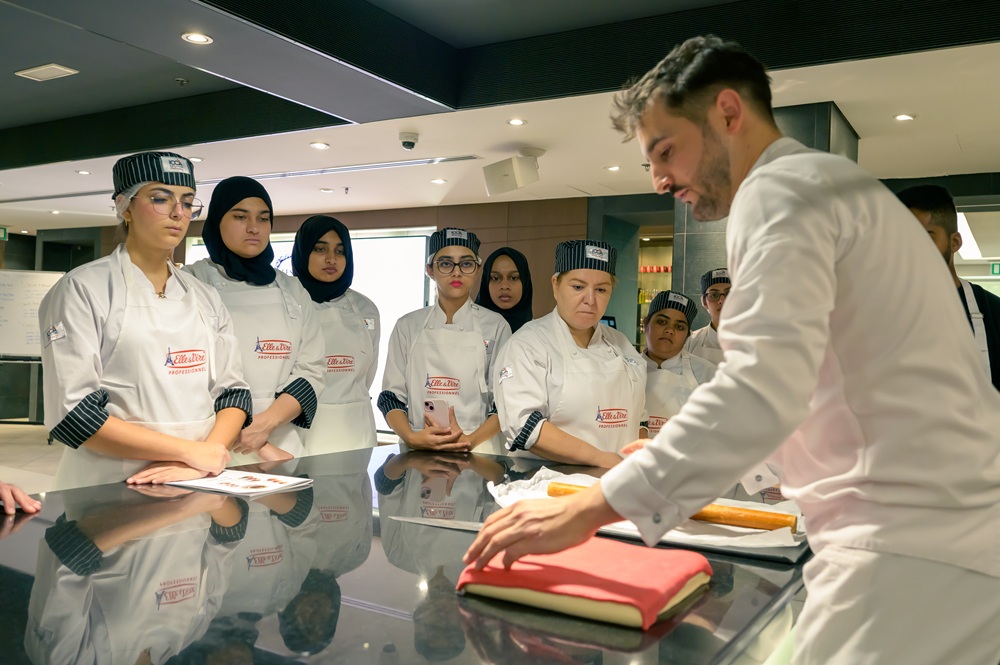
For those drawn to hospitality, food, cafés, bakeries, pastry, beverage service, or food entrepreneurship, ICCA Dubai offers one of the most structured vocational pathways in the region. Its programs are built around professional kitchens, recognised certifications, chef-led training, workplace behaviour, and industry placement — the elements that make culinary education more than a certificate.
A good vocational course should not only teach a skill. It should help learners understand where that skill belongs in the real world.


.jpg)