.jpg)
Choosing the right courses to study abroad in 2026 is no longer only about university rankings or academic prestige. For many students and working professionals, the bigger question is more practical: Which course can help me build real skills, enter a growing industry, and create international career options? That is why the study abroad conversation is changing. Students are still looking at traditional destinations such as the United Kingdom, Canada, Australia, Germany, and the United States, but they are also paying closer attention to cities where education is directly connected to industry. Dubai is now one of the strongest examples of this shift.
For international students comparing best courses in Dubai, the city offers a distinctive combination: English-language education, a multicultural working environment, tax-free earning potential, modern infrastructure, and strong demand across hospitality, business, technology, healthcare, construction, and creative industries.
This guide looks at the most in-demand courses to study abroad in 2026, compares leading study destinations, and explains why Dubai has become one of the most practical choices for students who want international exposure with clear career direction.
Why Study Abroad in 2026?
Study abroad has become more career-oriented than ever. According to UNESCO, more than 6 million students are now studying outside their home country, reflecting the continued growth of international academic mobility.
For students entering the job market in 2026, international education can offer several advantages.
First, employers increasingly value cross-cultural competence. A student who has lived, studied, and worked in another country often develops stronger communication skills, adaptability, and confidence in multicultural environments. These qualities matter in sectors such as hospitality, business, technology, healthcare, logistics, and customer-facing services.
Second, an international study can help students build professional networks across borders. Classmates, faculty, internship supervisors, and industry contacts can become long-term career connections. This is especially valuable in global cities where students interact with people from different regions and business cultures every day.
Third, many study abroad programs are now designed around labour-market needs. Instead of focusing only on theory, students are looking for programs that include practical training, industry exposure, project work, internships, or placement pathways. This is particularly important for short courses abroad and diploma programs, where the expected outcome is often faster employability.
Finally, global mobility remains an important career asset. Students with international qualifications and overseas work exposure may be better positioned to work across multiple countries, especially in sectors where skills are transferable. In 2026, fields such as AI, hospitality, healthcare, construction management, digital marketing, and culinary arts continue to attract students who want education that connects directly to employment.
Most In-Demand Courses to Study Abroad
The best course to study abroad depends on a student’s career goal, budget, timeline, and preferred destination. Some countries are stronger in research universities, while others are better suited to applied learning, vocational training, industry placement, or short-term professional development.
For students comparing study abroad short courses and longer diploma or degree pathways, the following fields remain among the most sought-after in 2026.
Business & Management
.jpg)
Business and management remain among the most flexible courses to study abroad because the skills are relevant across almost every industry. Students may choose undergraduate business degrees, MBA programs, or shorter diplomas in management, marketing, entrepreneurship, finance, project management, or operations.
The United Kingdom, Canada, Australia, and the United States continue to attract students for business education, while Dubai has become increasingly relevant for students who want exposure to international trade, entrepreneurship, real estate, hospitality, and regional business development.
For students who do not want to commit to a full degree immediately, short management programs can be useful for building practical skills in leadership, sales, customer experience, and business communication. These programs are especially valuable when they are connected to a live business environment rather than taught only through classroom theory.
Information Technology & AI
.jpg)
Information technology, AI, cybersecurity, and data science are among the strongest study abroad choices for students who want globally transferable skills. Programs may include computer science degrees, AI and machine learning specialisations, cloud computing certifications, cybersecurity diplomas, coding bootcamps, and data analytics courses.
The United States, Canada, Germany, and the United Kingdom remain major destinations for tech education, especially for students seeking research-driven or university-based pathways. Dubai is also becoming more relevant as the UAE continues investing in digital transformation, smart government, AI adoption, fintech, and startup ecosystems.
For students seeking short courses for jobs abroad, technology courses can offer strong career mobility. However, students should check whether the course includes practical project work, portfolio development, employer-recognised certification, and exposure to tools used in the workplace. In tech, the value of a course often depends not only on the certificate but on the student’s ability to demonstrate real output.
Hospitality & Culinary Arts

Hospitality and culinary arts are among the strongest practical fields for students who want a career connected to real operations, international mobility, and customer experience. Programs may include hotel management, culinary arts, baking and patisserie, tourism, event management, food entrepreneurship, café operations, and professional kitchen training.
Dubai is one of the most relevant destinations for hospitality education because the city is also a working hospitality market. Dubai welcomed 18.72 million international overnight visitors in 2024, and its hotel inventory reached 154,016 rooms across 832 establishments by the end of that year, according to Dubai Department of Economy and Tourism data.
For students considering short courses abroad, culinary arts can be especially practical because skills are visible, testable, and directly linked to workplace performance. A culinary student not only studies food; they also learn timing, hygiene, production discipline, teamwork, costing awareness, service expectations, and the standards required in professional kitchens, bakeries, cafés, and hotels.
Healthcare & Nursing
.jpg)
Healthcare, nursing, public health, healthcare management, and medical laboratory science continue to attract strong international demand. Many countries face healthcare workforce shortages, creating opportunities for students with recognised qualifications and professional licensing pathways.
The United Kingdom, Canada, Australia, and the UAE are all relevant destinations, although healthcare students must pay close attention to licensing, language requirements, clinical practice rules, and post-study work options. Nursing and allied health programs can offer strong long-term career potential, but they are usually more regulated than business, digital, or hospitality courses.
For students choosing healthcare as a study abroad pathway, accreditation is critical. The institution, qualification level, and licensing recognition in the destination country must be checked carefully before enrolment. Healthcare can be one of the most rewarding international study choices, but it requires more planning than many short vocational or business courses.
Engineering & Construction
.jpg)
Engineering and construction-related courses remain important because infrastructure, energy, transport, housing, and urban development continue to drive demand across many regions. Students may study civil engineering, mechanical engineering, electrical engineering, construction management, quantity surveying, project management, or sustainability-focused built environment programs.
Germany is traditionally strong in engineering education, especially for technical and manufacturing-related fields. Dubai and the wider Gulf region are also relevant because infrastructure, hospitality development, real estate, logistics, and smart city projects continue to create demand for technically skilled professionals.
Students comparing engineering courses abroad should look for programs with strong lab work, software training, site exposure, and industry links. For construction management in particular, classroom theory must be supported by a practical understanding of scheduling, procurement, safety, contracts, and coordination across multiple stakeholders.
Digital Marketing & Creative Arts
.jpg)
Digital marketing and creative arts are popular among students seeking flexible, transferable skills. Programs may cover content strategy, social media marketing, performance marketing, graphic design, UX/UI design, media production, branding, video editing, and creative entrepreneurship.
These fields are attractive because they can support employment, freelance work, agency roles, and small business development. Study abroad short courses in digital marketing are especially popular among career changers because they can be completed faster than full degrees and can be supported by portfolio work.
Dubai is a practical destination for digital and creative learning because the city has a large retail, hospitality, real estate, events, luxury, and tourism economy. These sectors constantly need digital content, customer acquisition, brand localisation, and campaign execution. For students who want short courses for jobs abroad, the strongest programs are those that help them build a visible portfolio, not just a certificate.
Top Countries for Studying Abroad in 2026
Choosing where to study is as important as choosing what to study. The right destination should offer quality education, realistic cost, student safety, industry relevance, post-study opportunities, and a lifestyle that supports personal growth.
UAE / Dubai
Dubai stands out in 2026 because it combines international education with a live business and hospitality environment. For students who want practical exposure, the city offers more than classroom learning. It gives students access to a multicultural labour market, global brands, regional headquarters, hotels, restaurants, events, free zones, and entrepreneurship opportunities.
Dubai is home to people from more than 200 nationalities, making it one of the most international cities in the world. English is widely used in education, hospitality, business, and daily professional life, which makes the transition easier for many international students.
Dubai also offers a strong cost-value proposition compared with traditional destinations such as the UK, USA, and Australia. While costs vary by institution and lifestyle, many students find Dubai more manageable when tuition duration, accommodation, transport, and earning potential are considered together.
For students in eligible institutions, the UAE has official student training and employment permit pathways, with documentation requirements listed by MOHRE and student visa requirements set out by the UAE Government portal. This gives students a regulated route to gain work exposure while studying.
Dubai is particularly strong for hospitality, culinary arts, business, tourism, digital marketing, logistics, and entrepreneurship. It is also a strategic gateway to the Middle East, Africa, South Asia, and global travel markets.
United Kingdom
The United Kingdom remains one of the world’s most established study abroad destinations. Its universities have strong global recognition, and many students are attracted by shorter degree structures, such as three-year bachelor’s degrees and one-year master’s programs.
The UK is especially strong in business, law, finance, arts, humanities, public policy, and research-based education. However, students must plan carefully around cost. International tuition can be high, and living costs in cities such as London, Oxford, Cambridge, Manchester, and Edinburgh can add significantly to the total budget.
The UK Graduate visa currently allows eligible students to stay after study, but the official GOV.UK guidance states that standard Graduate visas last two years for applications made on or before 31 December 2026 and 18 months for applications made on or after 1 January 2027, while PhD graduates remain eligible for three years.
For students starting in 2026, this timing matters. The UK remains prestigious, but post-study planning should be reviewed carefully before committing.
Canada
Canada is widely chosen for its education quality, multicultural environment, and immigration pathways. It is strong in business, technology, healthcare, engineering, public health, and applied diploma programs.
One of Canada’s key advantages is the Post-Graduation Work Permit, or PGWP. According to the Government of Canada, eligible graduates from qualifying programs may receive a PGWP linked to the length of their study program, with up to three years possible for programs of two years or more.
Canada is often seen as more affordable than the United States and sometimes the United Kingdom, although costs in Toronto, Vancouver, and other major cities can still be high. Students should also check changing immigration rules, program eligibility, and whether their chosen institution is PGWP-eligible before applying.
Australia
Australia remains a strong choice for students seeking high-quality education, English-language learning, and links to the Asia-Pacific region. It is popular for business, nursing, healthcare, engineering, hospitality, environmental studies, and creative industries.
Australia’s Temporary Graduate visa allows eligible international graduates to remain in Australia after study. The official Department of Home Affairs states that the Post-Higher Education Work stream allows graduates to stay for between two and three years, depending on circumstances and qualifications.
Australia offers a high quality of life and strong student support services, but international tuition and living costs can be substantial. Students should calculate the total cost carefully, especially in Sydney, Melbourne, Brisbane, and Perth.
Germany
Germany is one of the most attractive options for students seeking engineering, technical education, applied sciences, manufacturing, automotive studies, sustainability, and research-led programs. Public universities often offer low or no tuition fees, although students must still budget for living expenses, insurance, visa costs, and language preparation.
Many programs are now available in English, especially at the postgraduate level, but German language skills can still be important for daily life, internships, and employment. Germany is a strong choice for students who are academically prepared, independent, and comfortable with a more structured administrative process.
For engineering and technical students, Germany’s value lies in its industrial depth. However, students seeking faster practical entry through short vocational courses may find Dubai, Canada, or Australia more accessible depending on their field.
USA
The United States remains home to many of the world’s most prestigious universities and research institutions. It is especially strong in technology, finance, healthcare, business, entrepreneurship, engineering, media, and scientific research.
The USA offers unmatched academic breadth and industry networks, particularly in cities and regions connected to Silicon Valley, New York, Boston, Los Angeles, Austin, and other innovation hubs. For students seeking top-tier research, elite universities, or major corporate recruitment pipelines, the USA remains highly attractive.
However, the USA is also one of the most expensive study abroad destinations. Tuition can be very high, and the visa process can be complex. Students considering the USA should evaluate return on investment carefully, including scholarship options, Optional Practical Training eligibility, cost of living, and long-term employment pathways.
Why Dubai Stands Out for International Students
Dubai’s appeal is not based on one factor. It is the combination of education, employment exposure, safety, business activity, and lifestyle that makes the city increasingly competitive as a study abroad destination.
For international students, Dubai offers several practical advantages:
- A truly multicultural environment: With more than 200 nationalities living and working in the city, students are exposed to different cultures, languages, customer behaviours, and business styles from the beginning of their study journey.
- A strong hospitality and tourism market: Dubai welcomed 18.72 million international overnight visitors in 2024, and the city continues to rank among the world’s leading tourism destinations. For students in hospitality, culinary arts, events, tourism, and customer experience, this creates a relevant learning environment.
- A large hotel and F&B ecosystem: Dubai’s hotel inventory reached 154,016 rooms across 832 establishments by the end of 2024, creating continuous demand for skilled hospitality professionals.
- Tax-free earning potential: Dubai’s personal income tax environment is a major advantage for students and graduates who enter the workforce locally.
- Regulated education environment: Students should choose licensed and recognised institutions. Dubai’s education and training ecosystem is regulated through authorities such as KHDA, while student visa and work-related requirements should always be checked through official UAE Government and MOHRE channels.
- Business and entrepreneurship access: The UAE has more than 40 multidisciplinary free zones, offering foreign investors and businesses a strong platform for regional operations. This matters for students who want to build careers in business, trade, F&B, digital services, or entrepreneurship.
- English-language professional environment: English is widely used across education, hospitality, business, and tourism, making Dubai accessible to international students from many regions.
- Strategic location: Dubai connects easily to the Middle East, Africa, South Asia, Europe, and Asia, which is valuable for students who want regional and international career mobility.
For many students, the advantage of Dubai is that it feels international without being disconnected from industry. Students can study in a classroom, train in a practical facility, observe real hospitality standards, and enter a job market where service quality, speed, discipline, and multicultural communication matter every day.
ICCA Dubai: Best Course to Study Abroad for Culinary Arts

For students looking at culinary arts as a course to study abroad, Dubai offers one of the strongest combinations of destination and industry. The city is a working hospitality hub, with hotels, restaurants, cafés, cloud kitchens, events, luxury dining, catering, and tourism all operating at international scale.
Within this environment, ICCA Dubai stands out as a focused vocational institution for students who want professional culinary training that is practical, structured, and aligned with the realities of the hospitality industry.
Established in the UAE, ICCA Dubai has been featured among the Top 10 Culinary Institutes in the World and awarded the “Recognition of Quality Culinary Education” by Worldchefs, a global authority on food standards. Its programs are also connected to City & Guilds, London qualifications, giving students an internationally recognised vocational pathway.
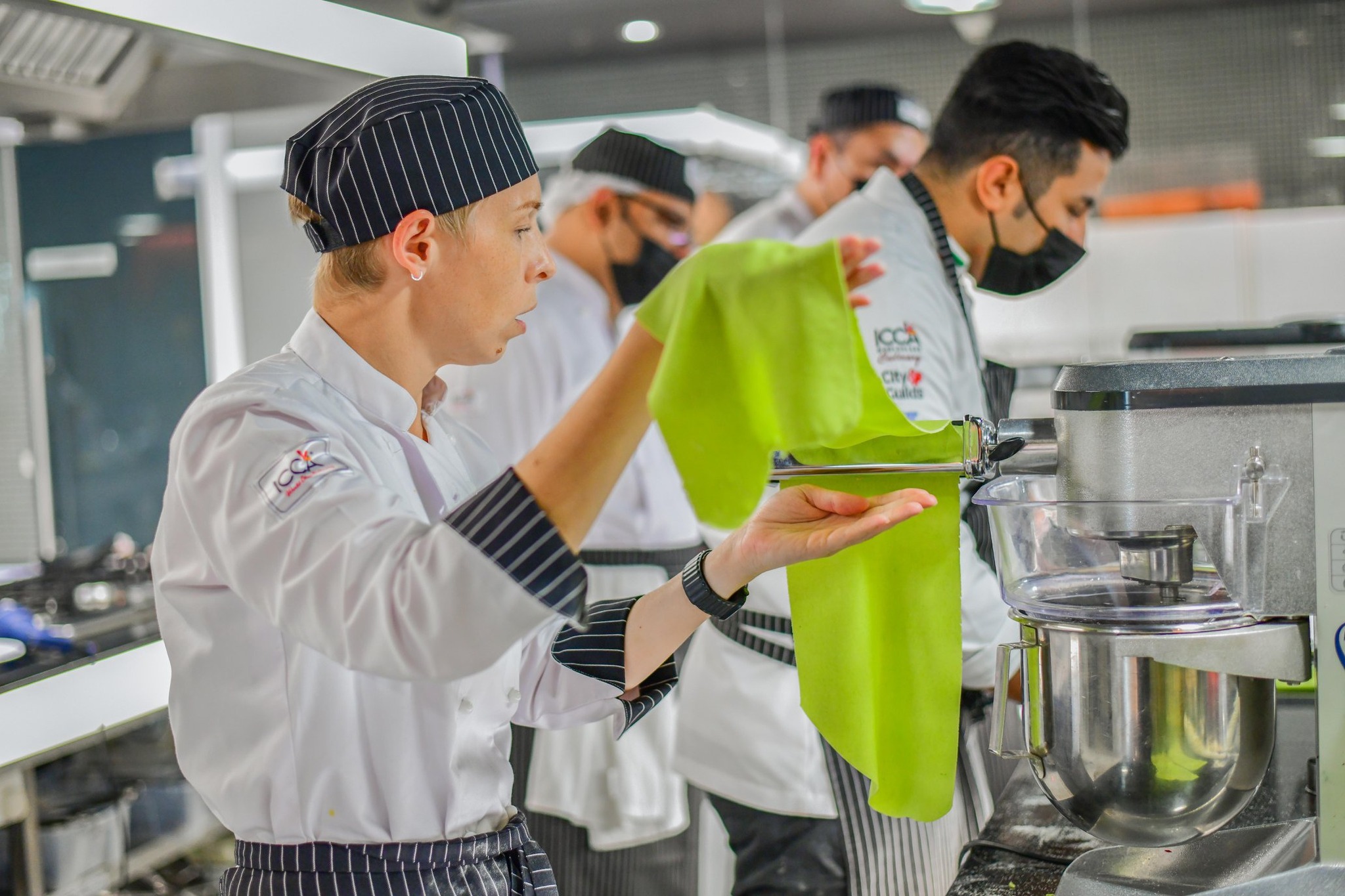
The Professional Diploma Programs at ICCA Dubai are designed for serious career entrants who want to train for professional kitchens, bakeries, pastry sections, hotels, restaurants, cafés, or food businesses. The training is intensive and hands-on, with a strong focus on applied skills, kitchen discipline, production standards, and professional readiness.
Students can choose pathways such as the Diploma in Culinary Arts - Cookery, the Diploma in Baking & Patisserie, and specialised short professional programs such as Barista Skills. ICCA’s Barista Skills program, for example, leads to a City & Guilds UK IVQ Award in Barista Skills and is delivered over five days with theory, hands-on practical training, and product presentation.
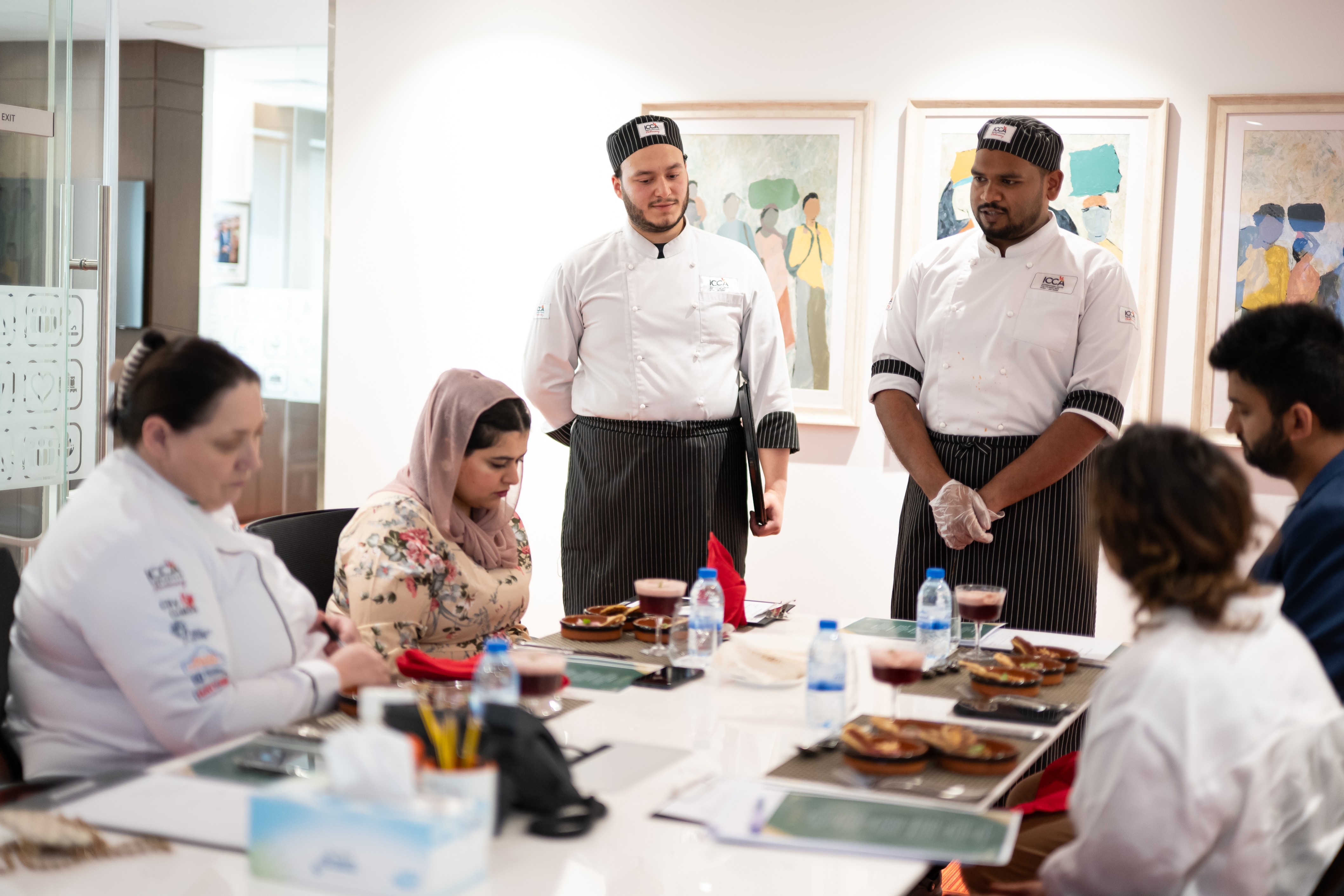
For international students, ICCA Dubai’s professional pathway is especially relevant because it combines training with student support. The institution provides guidance around visa processing, international arrival, accommodation assistance, and placement orientation. Its location in Dubai Knowledge Park also places students in one of Dubai’s recognised education clusters.
ICCA’s professional programs are commonly positioned around intensive full-time and part-time study options, with pathways such as Cookery, Baking & Patisserie, and advanced culinary supervision. Course fees and schedules should always be checked directly with ICCA before application, as published prospectus information may vary by intake and program. ICCA’s 2026 professional prospectus lists the IVQ Level 2 Diploma in Food Preparation and Culinary Arts – Food Preparation at AED 42,648, while other programme combinations, visa, accommodation, examination, and resource costs may differ by student requirement.
Career outcomes can include Commis Chef, Assistant Chef, Pastry Chef, Baker, café professional, food entrepreneur, kitchen supervisor, or progression into higher roles such as Sous Chef and Executive Chef over time. For students pursuing Level 3 or supervisory pathways, the focus can also extend into kitchen management, leadership, costing awareness, and operational supervision.
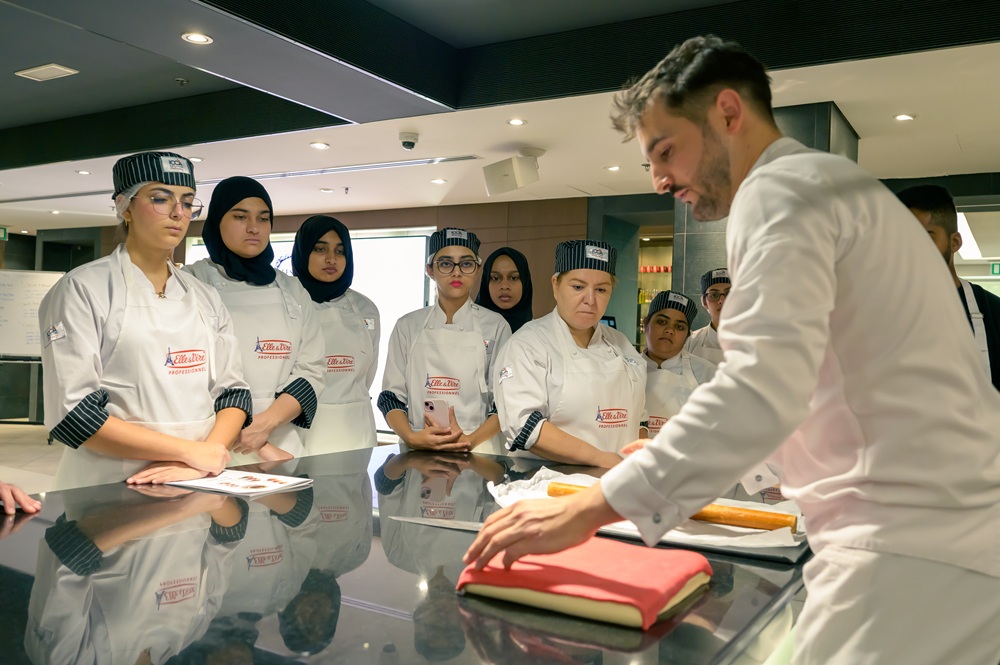
This is where ICCA Dubai’s positioning becomes especially clear. Culinary education is not only about learning recipes. It is about learning how a professional kitchen works: mise en place, hygiene, sequencing, consistency, timing, communication, food safety, production discipline, and teamwork under pressure. For students who want a short course abroad with serious career relevance, this practical environment can be more valuable than a purely academic route.
For students ready to evaluate a professional culinary pathway in Dubai, the natural starting point is the Professional Diploma Programs at ICCA Dubai, where the course structure, qualification route, and training options can be reviewed in detail.
How to Choose the Right Course to Study Abroad
A good study abroad decision should be based on more than a destination name. Students should compare accreditation, cost, work opportunities, course duration, learning style, visa requirements, and the strength of the local industry.
Accreditation & Recognition
Accreditation protects students. Before enrolling, check whether the institution and program are recognised by the relevant authority in the host country. In Dubai, this may include KHDA-related approval or attestation depending on the education provider and program type. In other countries, students may look at bodies such as QAA in the UK, TEQSA in Australia, or recognised professional and academic accrediting organisations.
International qualifications can also improve transferability. For example, City & Guilds, ABET, AMBA, AACSB, and other recognised bodies can add value depending on the field. In culinary arts, ICCA Dubai’s City & Guilds-linked vocational qualifications and Worldchefs recognition help students connect their training to global hospitality standards.
Post-Study Work Opportunities
Post-study work opportunities can strongly affect return on investment. Students should check whether they can work during study, after study, or both.
Dubai offers regulated pathways for student training and employment permits, and students should check eligibility through their institution and official UAE channels before working. Canada offers PGWP routes for eligible graduates, while the UK Graduate visa rules are changing from 2027 for most non-PhD graduates.
The practical question is simple: will the course help you gain local experience? For hospitality and culinary arts, a destination such as Dubai can be powerful because the local industry is active, international, and service-driven.
Cost of Living & Tuition
Students should calculate total cost, not only tuition. The real budget includes accommodation, food, transport, visa fees, insurance, uniforms, books, equipment, examination fees, and personal expenses.
Dubai can be more cost-effective than the UK, USA, or Australia for some students, especially when course duration is shorter and the program is directly career-focused. Students should also consider earning potential after graduation, especially in Dubai’s tax-free environment.
Institutions such as ICCA Dubai may offer instalment plans or structured payment options depending on the program. For any course abroad, students should request a full fee breakdown before confirming enrolment.
Visa Requirements & Process
Visa rules can affect timing, cost, and student confidence. Before committing to a course, students should understand the required documents, processing timeline, renewal rules, work restrictions, and whether the institution provides visa support.
The UAE Government portal lists student residence visa requirements, including the need for a certificate from the university or institute specifying the study duration. Students who want to work while studying should also check MOHRE permit requirements.
For culinary students coming to Dubai, institutional support can make the process easier. ICCA Dubai’s guidance for international students is useful because many applicants are managing training, relocation, accommodation, and career planning at the same time.
Duration & Flexibility
The right course duration depends on the student’s career stage. A school leaver may prefer a full diploma or degree. A working professional may prefer a short, intensive course. A career changer may need a program that is practical enough to support employment within months, not years.
Short courses abroad can be valuable when they teach specific job-ready skills. Examples include barista training, pastry skills, culinary fundamentals, digital marketing, project management, coding, and hospitality operations. Longer programs are more suitable when a field requires deeper academic preparation, licensing, or advanced theory.
For culinary arts, flexible routes matter. A full-time intensive program can help students enter the industry faster, while part-time or weekend formats may suit learners who are balancing work, family, or business responsibilities.
For students who are comparing study abroad options with a clear career outcome in mind, Dubai offers a practical setting where training, hospitality standards, and industry exposure come together. Those considering culinary arts, baking and patisserie, or café-focused professional skills can review the Professional Diploma Programs at ICCA Dubai to understand how structured vocational training in Dubai can support the next stage of their career.


.jpg)