

The sounds in your kitchen tell a story while you cook. Long before a dish looks or smells ready, the sizzle, bubble, and sputter of the pan signal exactly what is happening to your food. Learning to cook by sound is a skill every budding chef can build with practice.
Our senses play a major role in the kitchen. Most cooks rely on aroma, taste, and texture, smelling the food, tasting it, and touching it to check doneness. Sound is the sense most home cooks forget.
The above said are the classic practices that are carried out in any kitchen for a perfect cooking experience. However, have you ever tried listening to your food while cooking?Sounds crazy? Well, it is real, the food you cook does talk to you, and all you have to do is to listen to it intently to learn more.
A kitchen is usually noisy with the obvious sounds of mixers,grinders, and utensils. However, amidst that chaos, there lies that subtle whisperings of the food being cooked. Those sounds can help you become a seasoned hand in the kitchen if properly heard.

The sizzle of meat hitting the grill, the searing sound of onions getting caramelized in the skillet, the sputtering sound of mustard in oil, the bubbling sound of water boiling, and so much more, add up to those subtle sounds that many of us do not pay much attention to while cooking at home.However, taking note of these sounds and understanding the status of the food being cooked can only be done by a professional.
What Different Cooking Sounds Mean
Each stage of cooking has its own sound. Once you learn to recognise them, you can judge how food is progressing by ear, often before you even look.
Sizzling and Searing Sounds
A loud sizzle is the sound of moisture hitting a hot surface. When meat or onions meet a properly heated pan, the sharp sizzle tells you the surface is hot enough to sear, brown, and build flavour rather than steam the food. If the pan is too cool you hear little or nothing, and the food releases water and turns grey instead of golden. As the sizzle softens and slows, it signals that the surface moisture has cooked off and browning is underway. Learning to read that change helps you decide when to turn, baste, or lower the heat, which is exactly the kind of judgement professional chefs make by ear during a busy service.
Bubbling and Simmering Sounds
Water-based cooking has its own language too. A rolling boil is loud, with large fast bubbles breaking the surface, while a gentle simmer is much quieter, with small bubbles that rise slowly. Deep frying adds a steady bubbling and sputtering as moisture escapes the food, and that sound quietens as the food crisps and the moisture reduces. Learning to hear the difference between a hard boil and a soft simmer helps you hold a sauce at the right temperature, cook pasta without boiling over, and pull fried food at the right moment. Checking by ear also warns you before a pot is close to overcooking, so there is no last-minute rush.
If you ask a Chef, they would agree that these restrained sounds can teach you a lot more about cooking than you can even expect. There is a world of difference in the sounds of each step in cooking; sweating and sautéing has no sound to sizzling sound, when deep frying you will hear bubbling and sputtering sounds, boiling and simmering has serious bubbling sound to silent bubbling, same kind of sound variations go in whipping,creaming and for many more processes.
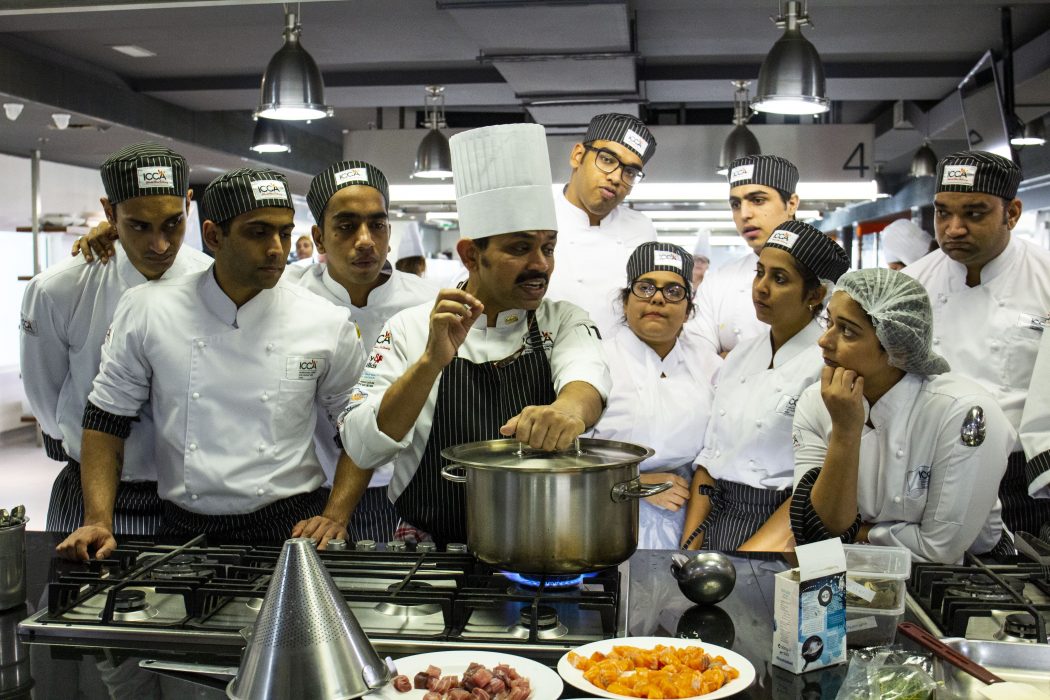
Sounds in the kitchen are quite informative and helpful for a budding chef. Checking every now and then is a good practice, but it is even better to listen to what you hear when you are in the kitchen. The practice can make you check on the food before it gets close to being over-cooked leading to the last minute mad rush.
Mastering the art of listening in the kitchen while cooking,requires proper training and expertise. What separates the great chefs from the mediocre is the extra effort spent in properly learning the techniques. At ICCA, we ensure that you are on the right track to attune yourself to the kitchen symphony.
Frequently Asked Questions
Q: How can chefs train their ear while cooking?
A: Start by cooking one dish at a time and listening for the moment a pan starts to sizzle, a pot shifts from a boil to a simmer, or frying quietens as food crisps. Pair each sound with what you see and smell so your ear learns the cue. This kind of listening is built with practice and hands-on training, such as ICCA Dubai's professional diploma programs.
2. Q: What do the different sounds in the kitchen mean?
A: A sharp sizzle means a pan is hot enough to sear, a soft steady bubble is a gentle simmer, and a loud rolling bubble is a full boil, while sputtering during frying signals moisture leaving the food. Each sound tells you what stage the food has reached, so you can adjust the heat or timing before you even look.
.jpg)
.jpg)

.jpg)
.jpg)
.jpg)

