
.jpg)
Close your eyes for a moment and picture this. A heavy pot, low heat, the kitchen slowly filling with the scent of cardamom, cloves, and slow-cooked lamb. A deep, crimson sauce — vivid and glossy — pooling around pieces of tender meat that have been simmering for the better part of an hour. No rushing. No shortcuts. Just spice, patience, and an ancient technique doing exactly what it was designed to do. That's rogan josh. And once you understand what makes it special — the spice logic, the yoghurt technique, the slow build of flavour — you'll want to make it again and again. This recipe and guide covers everything: the authentic Kashmiri background, every ingredient explained, step-by-step method, variations, and the tips that separate a genuinely great rogan josh from the pale imitation you'll often find on a restaurant menu.
What Is Rogan Josh?
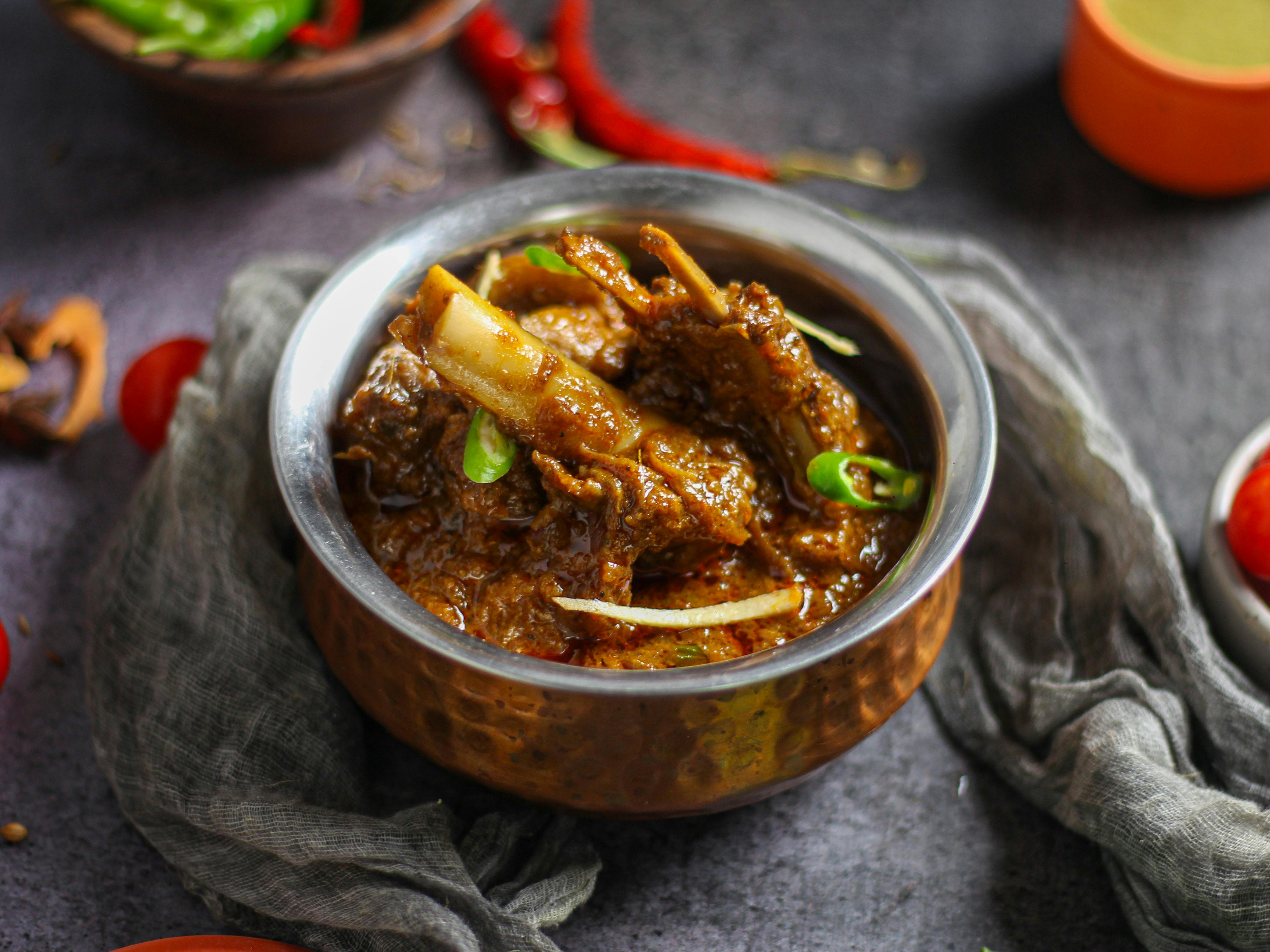
Rogan josh is an aromatic curried meat dish from Kashmiri cuisine, dating from the time of the Mughal Empire. It is one of the main dishes in the Wazwan — the traditional multi-course Kashmiri feast — and is made with red meat, coloured and flavoured primarily by Kashmiri chillies and aromatic whole spices.
Where does the name come from?
The dish has Persian and Mughal origins. "Rogan" means oil or clarified butter in Persian, while "josh" denotes intense heat or passion. Together, rogan josh translates loosely as "cooked in hot oil" or "stewed with intense heat."
The story begins centuries ago when Mughal emperors brought Persian culinary traditions to Kashmir. Over time, locals adapted the dish to suit their palate — reducing the pungency of the original Persian preparation by introducing yoghurt and Kashmiri chilli powder, which adds deep colour without excessive heat.
What makes it different from other curries?
Unlike many Indian curries, rogan josh uses no cream and traditionally no heavy tomato base. Its flavour and texture come from yoghurt, Kashmiri red chillies, and ground spices — giving it a rich yet balanced profile without being overly spicy.
There's also an important cultural distinction worth knowing: there are essentially two traditional versions of rogan josh — the Kashmiri Muslim version, which uses onions and garlic, and the Kashmiri Pandit (Hindu Brahmin) version, which uses neither, relying instead on asafoetida (hing) and fennel to build its flavour base. Most restaurant versions fall somewhere between these two traditions — the recipe below takes a home cook's approach that honours the spirit of the original while being practical to make anywhere in the world.
Key Ingredients for Authentic Rogan Josh
.jpg)
Getting the ingredients right is everything with this dish. A few substitutions will change the result entirely.
The Meat
Rogan josh is traditionally made with mutton — and in the Kashmiri context, that means bone-in goat meat, not lamb. Outside of South Asia, lamb shoulder or bone-in leg is the most practical substitute and produces a beautiful result.
Why bone-in? The bone marrow releases gelatin and flavour into the sauce during slow cooking — it's one of the key reasons authentic rogan josh has such body and depth. Boneless lamb works, but the sauce won't have the same richness.
Aim for pieces cut to roughly 4–5cm — large enough to stay tender through the long cook without falling apart.
The Spice Blend
This is where rogan josh earns its reputation.
Whole spices (bloomed in oil):
- Black cardamom pods — smoky, woody, commanding
- Green cardamom pods — sweet and floral
- Cinnamon stick
- Cloves
- Bay leaves
- Fennel seeds
Ground spices (added to the yoghurt base):
- Kashmiri chilli powder — non-negotiable. This is what gives rogan josh its signature deep red colour without making it fiercely hot. Do not substitute regular chilli powder or cayenne — you'll end up with a different dish entirely
- Fennel seed powder (saunf powder)
- Dry ginger powder (sonth)
- Ground coriander
- Ground cumin
- Garam masala
Optional but traditional: Ratan jot (alkanet root) — a natural colouring agent used in authentic Kashmiri preparations to deepen the red. Available at specialist Indian grocery stores. Not essential, but worth tracking down if you want the full effect.
The Base
- Yoghurt — full-fat, at room temperature. This is the body of the sauce. It must be added gradually and carefully to prevent splitting (more on this below)
- Ghee or mustard oil — ghee gives richness; mustard oil gives authenticity. For an authentic restaurant-style result, smoke the mustard oil first until it begins to shimmer — this removes its raw bitterness. If using ghee, no pre-treatment needed
- Onions and ginger — for the Muslim-style version
- Asafoetida (hing) — a small pinch replaces onion and garlic in the Pandit version; it has a pungent, savoury quality that disappears into the background once cooked
Rogan Josh Spice Paste Preparation
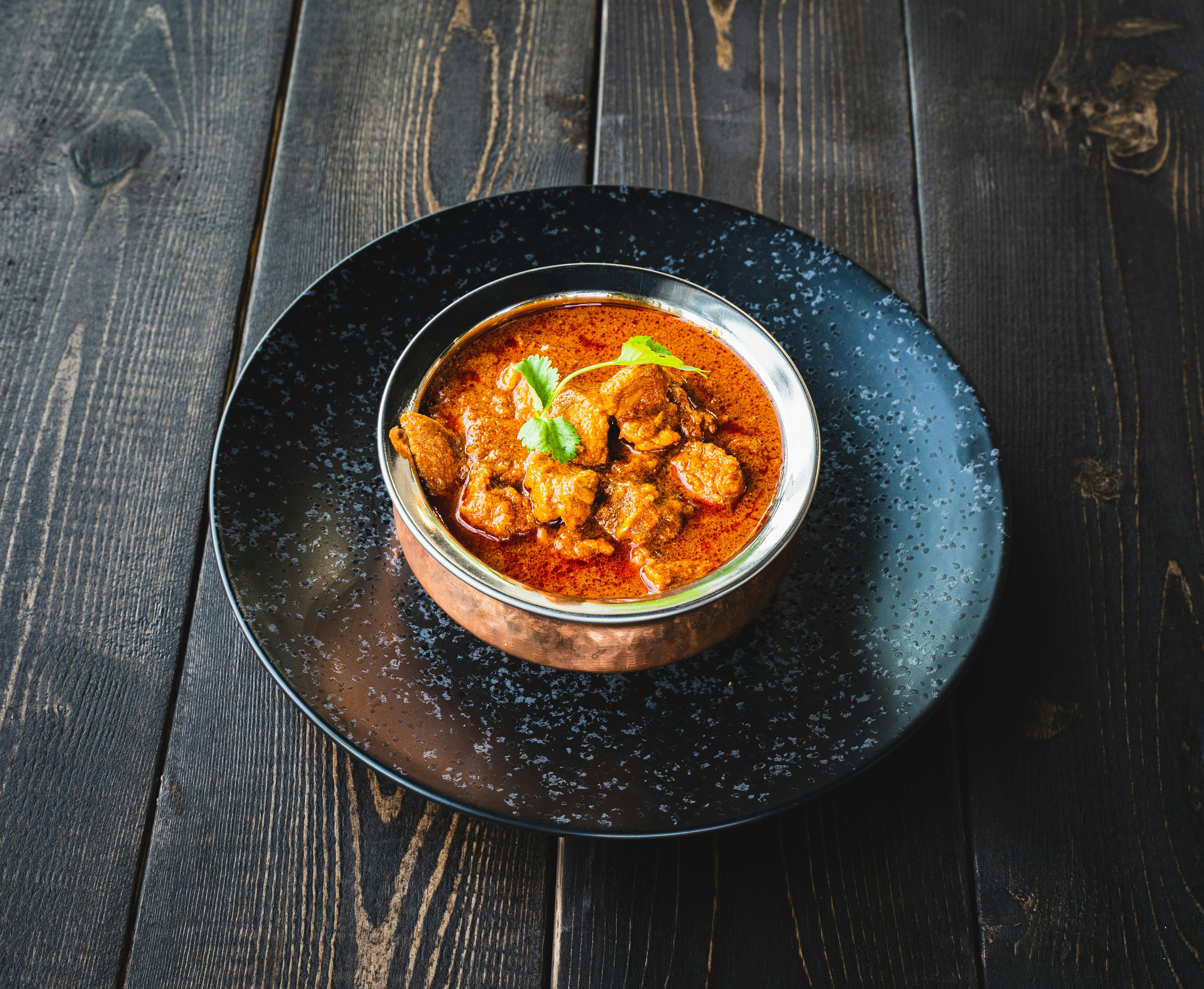
Before you start cooking, take ten minutes to build your spice mixture — this is what separates a memorable rogan josh from a flat one.
In a small dry pan over medium-low heat, lightly toast your whole spices (fennel seeds, black and green cardamom, cinnamon, cloves) until fragrant — about 60–90 seconds. Don't walk away; they can burn quickly.
Transfer to a spice grinder or mortar and pestle and grind to a fine powder.
In a bowl, whisk together your full-fat yoghurt, the freshly ground spice powder, Kashmiri chilli powder, fennel powder, dry ginger powder, ground coriander, cumin, and salt until completely smooth. This yoghurt-spice mixture is your sauce base — and the reason authentic rogan josh has such depth right from the first bite.
Understanding the chemistry of this step connects directly to professional cooking techniques — the toasting process drives off moisture and activates volatile flavour compounds in the spices that are otherwise locked in.
Step-by-Step Rogan Josh Recipe
Prep time: 20 minutes Cook time: 1 hour 30 minutes – 2 hours Serves: 4
Ingredients:
- 800g bone-in lamb shoulder or leg, cut into 4–5cm pieces
- 3 tbsp ghee or mustard oil
- 2 medium onions, finely sliced
- 1 tbsp fresh ginger, finely grated
- 2 bay leaves
- 2 black cardamom pods, lightly crushed
- 3 green cardamom pods, lightly crushed
- 1 cinnamon stick
- 4 cloves
- ¼ tsp Asafoetida (hing)
- 1½ cups (375g) full-fat yoghurt, whisked until smooth, room temperature
- 2 tbsp Kashmiri chilli powder
- 1½ tbsp fennel seed powder
- 1 tsp dry ginger powder
- 1 tsp ground coriander
- 1 tsp ground cumin
- 1 tsp garam masala
- Salt to taste
- Fresh coriander leaves to garnish
Step 1 — Marinate the Lamb
Pat the lamb pieces completely dry with paper towels — moisture is the enemy of a good sear. Season generously with salt and a tablespoon of Kashmiri chilli powder. Massage it into the meat and leave to sit at room temperature for at least 30 minutes, or covered in the fridge for up to overnight. Longer marination = more flavour in the final dish.
Step 2 — Bloom the Whole Spices
Heat your ghee or mustard oil in a heavy-bottomed pot or Dutch oven over medium heat. If using mustard oil, heat until it just begins to smoke, then reduce to medium. Add the bay leaves, black and green cardamom, cinnamon stick, and cloves. Let them sizzle gently for 60–90 seconds — you'll hear them pop and the kitchen will smell extraordinary. Add the Asafoetida and stir for 10 seconds.
This is the foundation of the entire dish. The traditional preparation involves frying spices in fat to stimulate their flavours and infuse the oil with their essence before any other ingredients are added. Don't rush this step.
Step 3 — Cook the Onions and Ginger
Add the sliced onions and cook over medium heat, stirring regularly, for 15–20 minutes until deeply golden — the colour of amber. This is not a step to rush. Properly caramelised onions build a sweetness and body into the sauce that can't be replicated any other way.
Add the grated ginger and cook for another 2–3 minutes until fragrant.
Step 4 — Sear the Lamb
Turn the heat to medium-high. Add the lamb pieces in a single layer — work in batches if your pot isn't large enough. Sear for 3–4 minutes per side without moving, until deep brown on the outside. This browning is not about cooking the lamb through; it's about developing the Maillard reaction — caramelised proteins that add flavour complexity to the sauce.
This is one of the basic cooking skills that makes the most difference: never crowd the pan, always let the sear develop before turning.
Step 5 — Build the Sauce
Reduce the heat to medium-low. Now comes the critical step: add the yoghurt-spice mixture one large spoonful at a time, stirring constantly between each addition and waiting for each spoonful to be fully incorporated before adding the next.
This gradual addition is what prevents the yoghurt from curdling and breaking the sauce. Rush this, and you'll end up with a grainy, split curry instead of the silky, glossy sauce you're after. Take your time — the whole process takes about 5–8 minutes.
Add a splash of warm water (about ½ cup) to loosen the sauce slightly. Stir everything together, scraping up any caramelised bits from the bottom of the pot.
Step 6 — Slow Cook
Cover the pot with a tight-fitting lid and reduce the heat to the lowest setting your hob will manage. Cook for 1–1.5 hours, stirring every 20 minutes and adding small splashes of water if the sauce thickens too much.
You'll know the dish is approaching done when the oil begins to separate from the sauce and float on the surface — a visible orange-red layer of ghee on top of the deep crimson curry. This oil separation — the rogan rising to the top — is the traditional signal that the dish is ready. It means the sauce has cooked down fully and the spices have integrated completely into the fat.
Step 7 — Finish and Garnish
Taste and adjust seasoning. Add the garam masala and stir through. Remove the whole spices (bay leaves, cardamom pods, cinnamon stick, cloves) if you prefer — or leave them in and let guests move them aside.
Rest the curry for 10 minutes off the heat before serving. This resting period allows the flavours to settle and the sauce to thicken slightly.
Garnish with fresh coriander leaves. Serve immediately, or refrigerate overnight — it will be even better the next day.
The Slow-Cooking Method: Why Patience Matters
Rogan josh cannot be rushed. The 90-minute cooking time isn't arbitrary — it's science.
Lamb shoulder and leg contain significant amounts of connective tissue (collagen). During slow cooking at low, steady heat, that collagen converts to gelatin — the compound that gives a great curry its glossy, full-bodied sauce and the meat its fall-off-the-bone tenderness. High-heat cooking tightens the muscle fibres and produces tough, chewy meat even when fully cooked through.
The gradual yoghurt addition works on the same principle as emulsification in French cooking — the depth and body of an authentic rogan josh comes from bone marrow, chilli paste, fennel powder, ginger powder, and yoghurt, not from onions, tomatoes, or cream. Understanding these building blocks is exactly what French cooking techniques also teach — sauce-making is sauce-making, whether you're in a Kashmiri kitchen or a Parisian one.
Serving Suggestions for Rogan Josh

Rogan josh is a generous, giving dish — it pairs well with almost any good accompaniment.
Rice: Plain steamed basmati is the classic pairing — its neutrality lets the curry speak. For something more special, try saffron rice (add a few soaked saffron strands to the cooking water) or jeera rice (cumin-tempered rice). This pairs beautifully alongside a traditional Pakistani chicken biryani for a larger spread.
Bread: Butter naan, tandoori roti, or lachha paratha — something to mop up the sauce is non-negotiable.
Cooling sides: A cucumber raita (yoghurt, grated cucumber, cumin, mint) cuts through the richness beautifully. A simple kachumber salad (diced tomato, cucumber, onion, coriander, lemon juice) adds freshness.
For a Wazwan-inspired feast: Serve alongside seekh kebabs, a vegetable dish, and rice to give your guests the sense of that magnificent Kashmiri multi-course tradition — the Wazwan in its grandest form comprises 36 courses, with between fifteen and thirty being meat preparations cooked overnight by master chefs. Your home version will be considerably more manageable.
How to Store and Reheat Rogan Josh
One of the best things about rogan josh is that it actively improves with time. The spices continue to develop overnight, and the sauce thickens and deepens in a way that freshly made curry simply can't match.
- Refrigerator: up to 4–5 days in an airtight container
- Freezer: up to 3 months — portion into freezer bags flat for efficient storage
- To reheat: always reheat gently on the stovetop over low heat, adding a small splash of water to loosen. Avoid microwaving if possible — it heats unevenly and can toughen the meat
Make a large batch on the weekend and eat it better all week.
Rogan Josh Variations
Chicken Rogan Josh
Use bone-in chicken thighs instead of lamb — they have enough fat and collagen to produce a rich sauce. Reduce the total cook time to 35–40 minutes. Skip the initial long marination; 30 minutes is enough for chicken.
Vegetable Rogan Josh
Paneer, firm potatoes, cauliflower florets, and chickpeas all work beautifully. Use the same spice base and yoghurt technique. Reduce the simmer to 30–35 minutes — you want the vegetables tender but intact. Add paneer in the last 10 minutes only.
Mutton Rogan Josh (Traditional Kashmiri Style)
Mutton rogan josh — made with bone-in goat — is the truly traditional Kashmiri preparation, slow-cooked for 2.5–3 hours until the meat is completely yielding. If you can source goat from a halal butcher (widely available across the UAE), this is the version to try for a special occasion.
Instant Pot / Pressure Cooker Rogan Josh
Complete Steps 1–5 in the Instant Pot using the sauté function. Seal the lid, cook on high pressure for 25 minutes, then allow a natural pressure release for 10–15 minutes before opening. The result is excellent though slightly less layered in flavour than the slow-cooked version.
Tips for Authentic Rogan Josh Flavour
Use Kashmiri chilli powder — not cayenne, not paprika, not "red chilli powder." The difference is significant. Kashmiri chilli produces that iconic deep red without making the dish fiercely hot. Available at any Indian grocery store in Dubai and across the UAE.
Toast your whole spices before grinding. Even 60 seconds in a dry pan makes a meaningful difference to the flavour of your spice base.
Don't rush the onions. Pale, underdone onions produce a sharp, raw flavour in the final sauce. Deep golden onions produce sweetness and complexity. Give them the time they need.
Add yoghurt gradually, always. One spoonful at a time, stirred fully before the next. This is the step most home cooks get wrong — and it's the step that determines whether your sauce is silky or split.
Let the oil separate. That pool of red-tinged ghee floating on the surface at the end isn't a problem — it's the signal you've done it right.
Rest before serving. Ten minutes off the heat makes a noticeable difference to the sauce consistency and flavour.
If you want to build strong foundations in authentic cooking techniques and take your passion further, you can enroll in ICCA’s Professional Diploma in Cookery and train in a world-class culinary environment.

.jpg)
.jpg)

.jpg)
.jpg)
.jpg)

