Culinary school teaches far more than just how to cook. A strong program combines foundational cooking techniques, kitchen discipline, food safety, pastry skills, menu planning, and hospitality operations in a hands-on training environment designed to prepare students for real work in professional kitchens. That matters even more in Dubai, where the hospitality industry continues to expand alongside tourism: Dubai welcomed 19.59 million international overnight visitors in 2025, reinforcing demand for skilled culinary and hospitality talent. Institutions such as ICCA Dubai and Dubai College of Tourism reflect that industry-linked training model through practical, career-focused culinary education.
Essential Knife Skills and Equipment Mastery
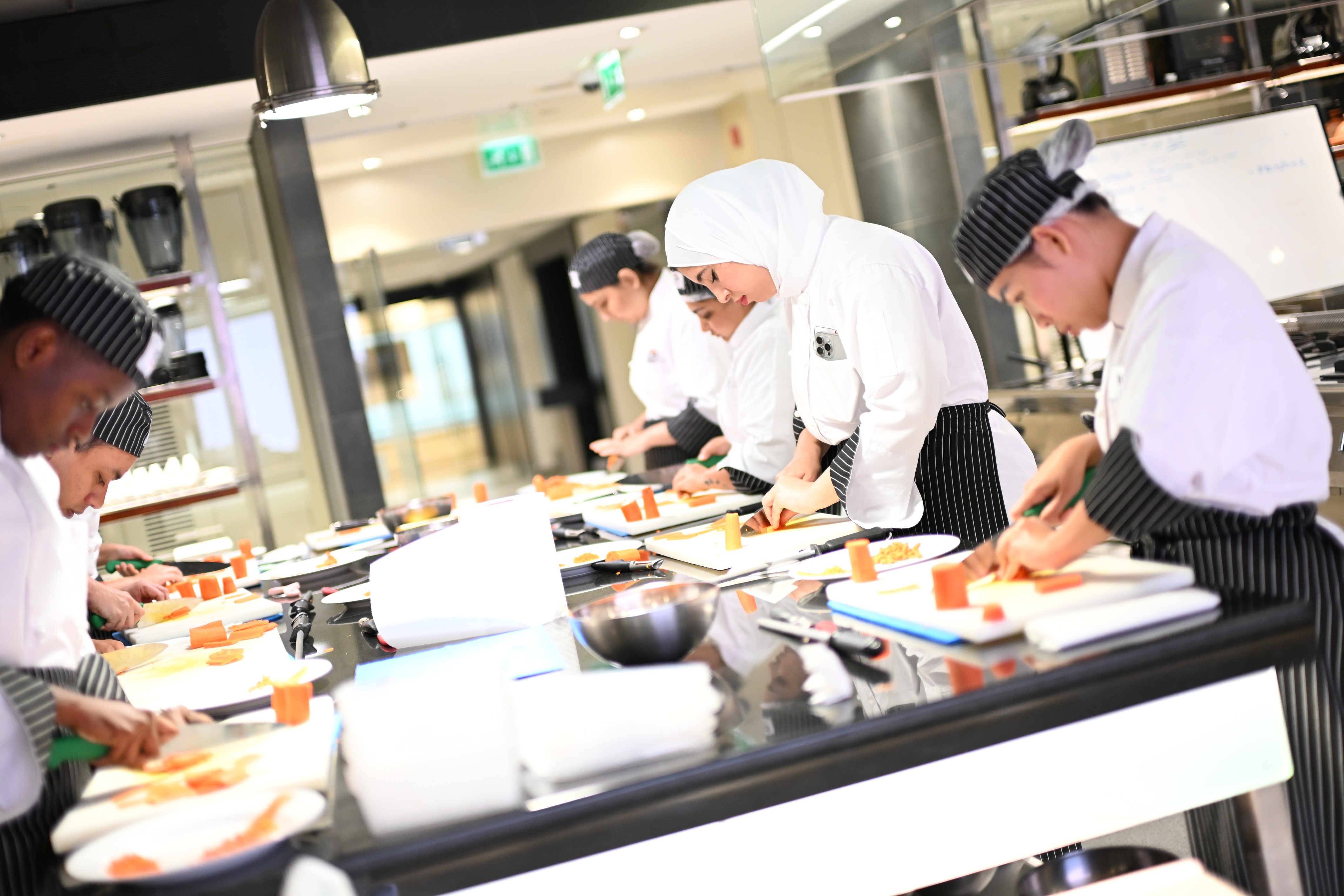
One of the first things students learn in culinary school is how to handle knives properly. That starts with grip, posture, safety, and control, then develops into precision cuts such as julienne, brunoise, batonnet, chiffonade, and fine dicing. These skills are not just about appearance; they directly affect cooking time, consistency, yield, and presentation in a professional kitchen. Students also learn how to choose and maintain key tools such as the chef’s knife, paring knife, serrated knife, peelers, mandolines, and sharpening equipment, because speed and precision depend on knowing your tools as well as your ingredients. ICCA’s professional programs explicitly emphasize intensive hands-on training that prepares students for kitchen work, where these basics become daily practice.
Classical Cooking Methods and Techniques
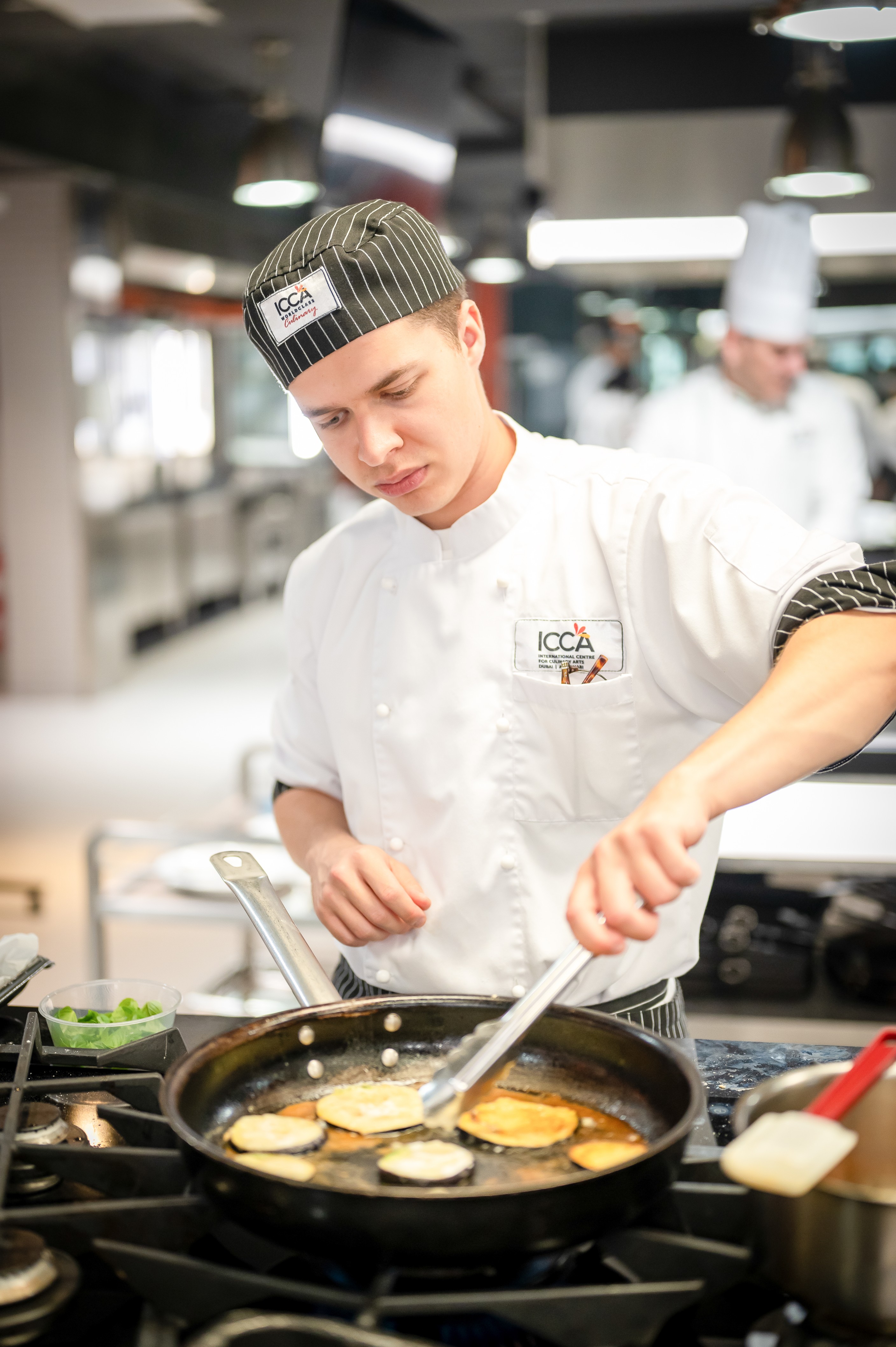
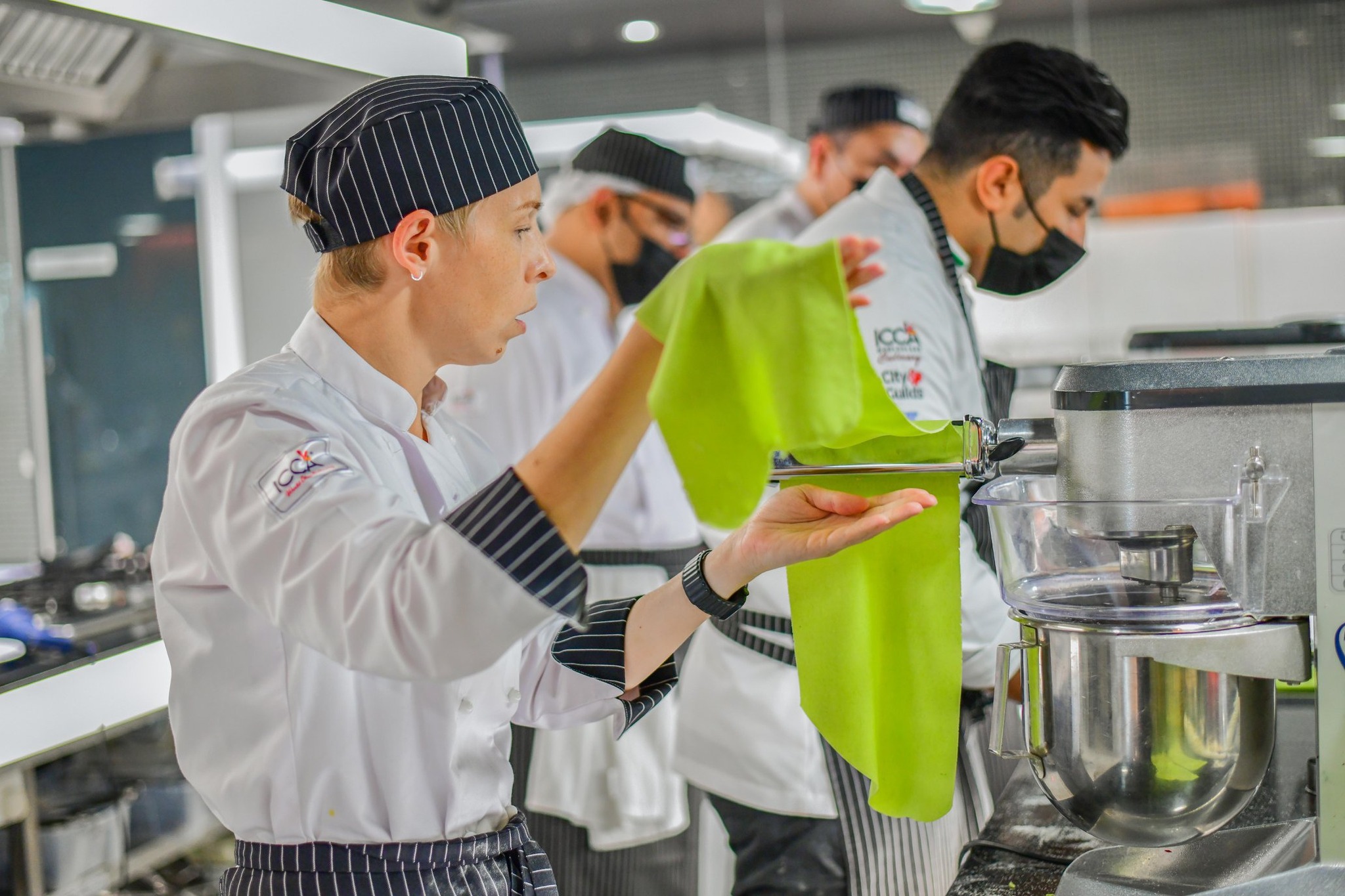
Culinary school builds a student’s technical foundation through classical cooking methods. Students repeatedly practice dry-heat methods such as roasting, grilling, sautéing, pan-searing, and baking, along with moist-heat methods such as poaching, steaming, simmering, braising, and blanching. They also learn what happens scientifically during cooking, including how browning develops flavor, how temperature affects doneness, and how timing changes texture. In better programs, these methods are not taught as isolated tasks but as part of a structured progression that builds judgment, consistency, and culinary intuition. ICCA’s professional diploma structure is centered on this kind of applied, technique-led training rather than purely theoretical learning.
Food Safety and Sanitation Standards
Food safety is one of the most important parts of culinary training. Students learn hygiene practices, safe storage, allergen awareness, contamination prevention, cleaning schedules, and correct handling procedures for raw and cooked foods. In Dubai, this knowledge is especially important because food businesses operate in a highly regulated environment shaped by public health requirements. Dubai Municipality oversees food and consumer product safety and also provides professional training and accreditation pathways, while the UAE government’s food safety framework emphasizes legal standards designed to protect consumers and public health. That means culinary students are not only learning how to cook well, but also how to work safely and responsibly in line with industry expectations.
International Cuisines and Culinary Diversity

A good culinary school also exposes students to a broad range of cuisines and techniques. In a city like Dubai, that diversity matters. Students may train across French, Italian, Middle Eastern, Asian, and contemporary international cooking styles, learning how ingredients, spice profiles, preparation methods, and plating styles vary from one cuisine to another. This is especially relevant in Dubai’s global dining landscape, where kitchens often serve multicultural audiences and employers value versatility. The scale and profile of Dubai’s restaurant scene, including the 2025 MICHELIN Guide Dubai selection, show why students benefit from learning beyond one single culinary tradition.
Sauce Preparation and Flavor Development
Sauce work is another major part of culinary education because it teaches students how flavor is built, balanced, and refined. Students usually begin with stocks, reductions, emulsions, and the classical mother sauces, then learn how to transform those foundations into practical service sauces for different cuisines and menu styles. Along the way, they develop a deeper understanding of seasoning, acidity, texture, body, and finishing techniques. This kind of training matters because in professional kitchens, sauces often separate an average dish from a polished one. ICCA’s industry-centered diploma model, which is geared toward hotel and restaurant readiness, reflects the importance of mastering these foundational production skills.
Pastry Arts and Baking Fundamentals

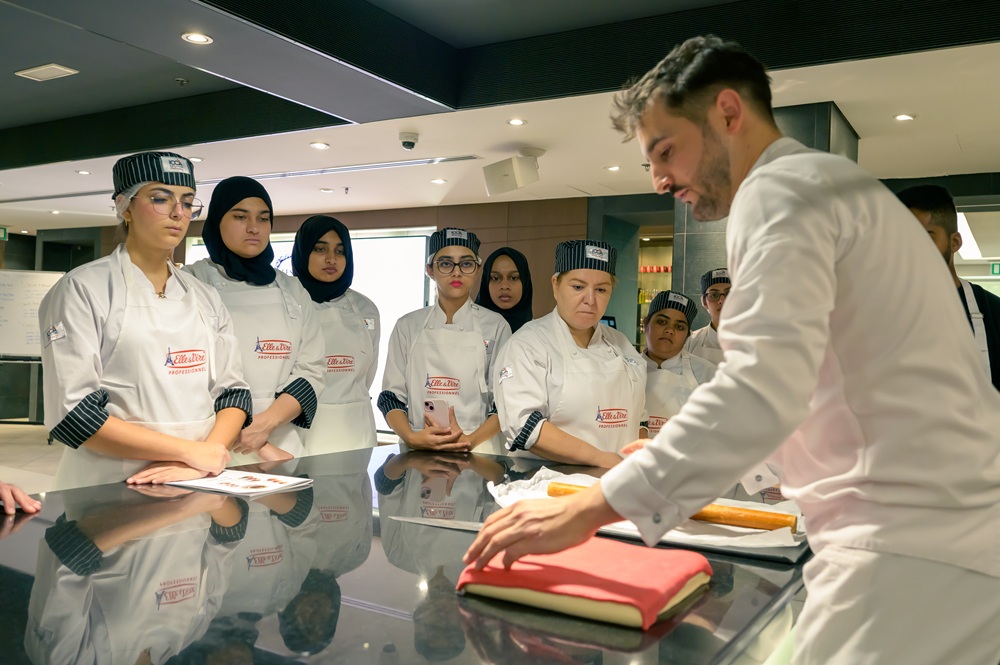
Many culinary schools also teach pastry and baking fundamentals, either as part of the main curriculum or through dedicated specialization tracks. Students learn about doughs, batters, breads, fermentation, lamination, pastry creams, desserts, chocolate work, and precision measurement, all of which require a different mindset from savory cooking. Baking places stronger emphasis on ratios, process control, proofing, timing, and temperature accuracy. ICCA offers a dedicated Professional Baking & Patisserie pathway accredited by City & Guilds and recognized by Worldchefs, which reflects how seriously pastry education is treated within professional culinary training.
Kitchen Management and Operations
Culinary school also introduces students to how kitchens run as businesses and teams. That includes mise en place systems, station organization, workflow planning, basic costing, menu thinking, purchasing awareness, inventory discipline, and communication under pressure. Students begin to understand that professional cooking is not only about creativity; it is also about consistency, timing, teamwork, and operational control. This becomes especially important for learners who want to grow into supervisory or entrepreneurial roles. ICCA’s published program outcomes explicitly connect training not only to entry-level kitchen roles but also to progression into supervision and food-production operations.
Professional Standards and Industry Expectations
One of the most valuable things students learn in culinary school is professional discipline. Kitchens demand punctuality, cleanliness, resilience, communication, and the ability to perform under pressure. Students learn to work as part of a brigade, accept feedback, repeat techniques until they are consistent, and maintain standards even during busy service conditions. That expectation is not abstract in Dubai; it is reinforced by a hospitality sector shaped by luxury hotels, fine dining, and internationally benchmarked restaurant standards, including MICHELIN-recognized establishments. Programs accredited by bodies such as City & Guilds and recognized by Worldchefs are designed to align students with those real-world expectations.
For aspiring chefs who want to build these skills in a professional training environment, ICCA Dubai offers internationally recognised culinary programs designed to prepare students for the realities of modern kitchens. Through hands-on learning, industry-led training, and globally benchmarked standards, ICCA helps students develop the confidence, discipline, and practical expertise needed to begin a successful culinary career.


.jpg)